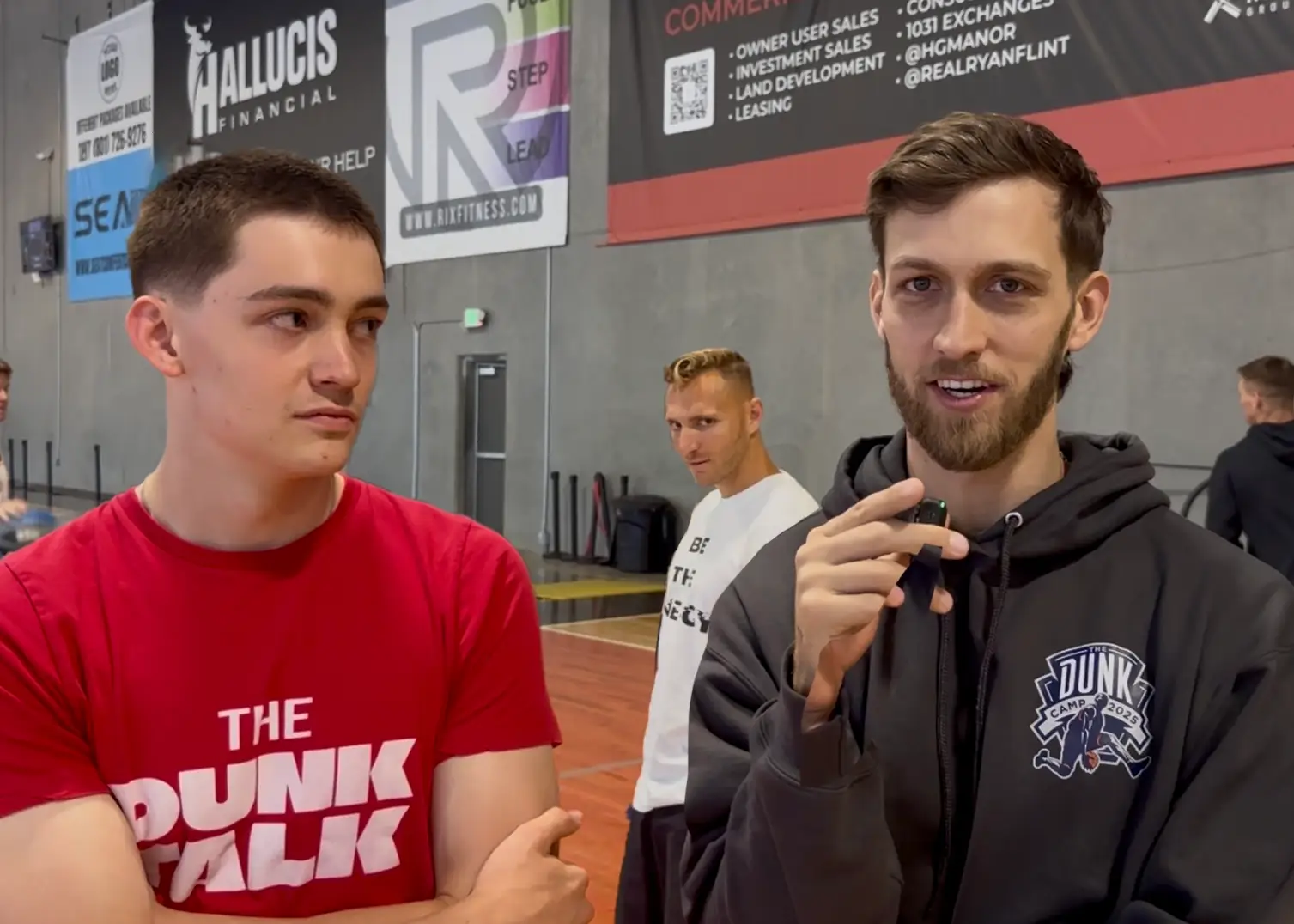
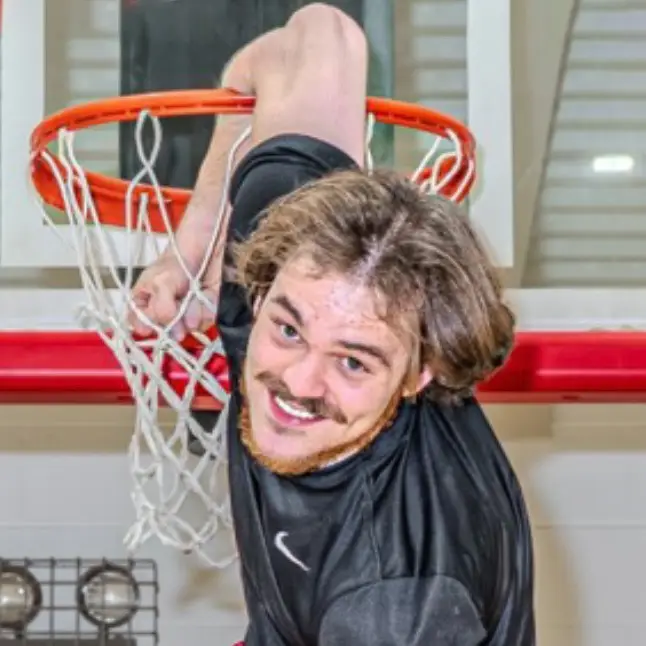
Put the highest jumper in the world next to the best pair of hands under 20 and let them ask each other questions. That is the whole video, it runs about two minutes, and somewhere in the middle of it one of them gives away his entire training routine without being pushed.
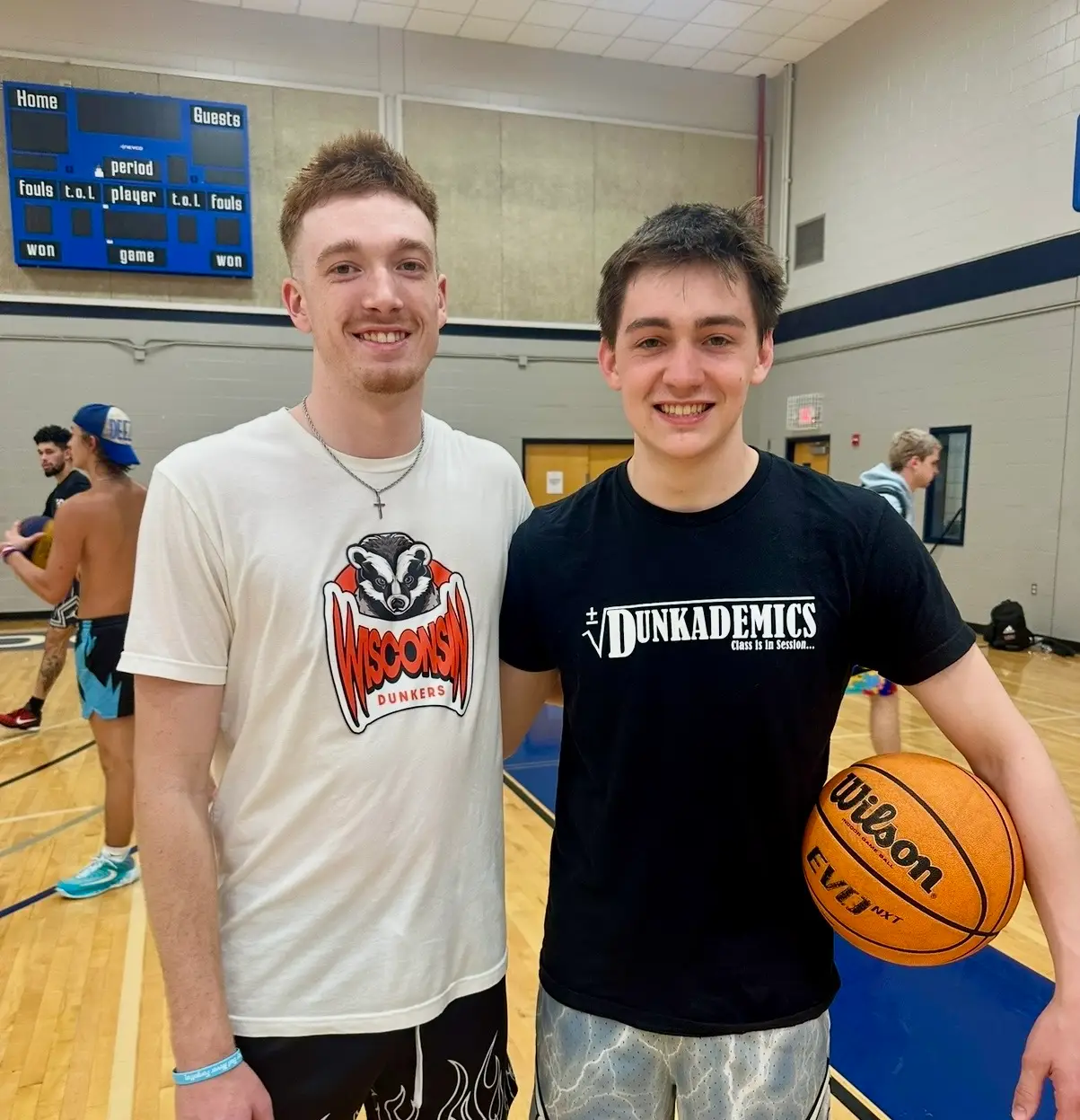
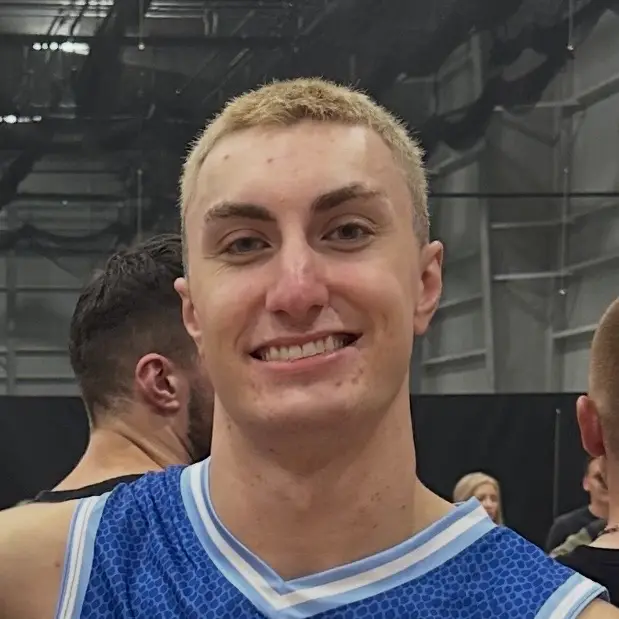
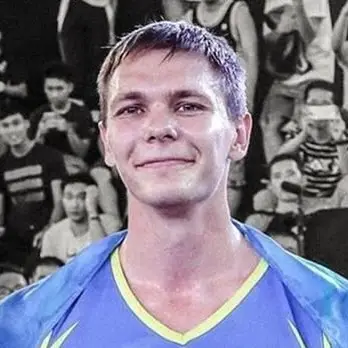
The two dunkers are Ethan Pimstone and Piotr Zawiślak, and I filmed them at The Dunk Camp in Salt Lake City. The number gets stated in the first ten seconds, because it always does.
“that’s a world record holder. 52.5 inches.”
Ethan Pimstone
For anyone outside this community, 52.5 inches of max vertical is not a slightly better version of what good athletes do. It is a different category of human. Ethan tested 47.5 at this camp in 2025 and landed his first Eastbay in the same week, which tells you how fast the arc is moving.
The Matchup
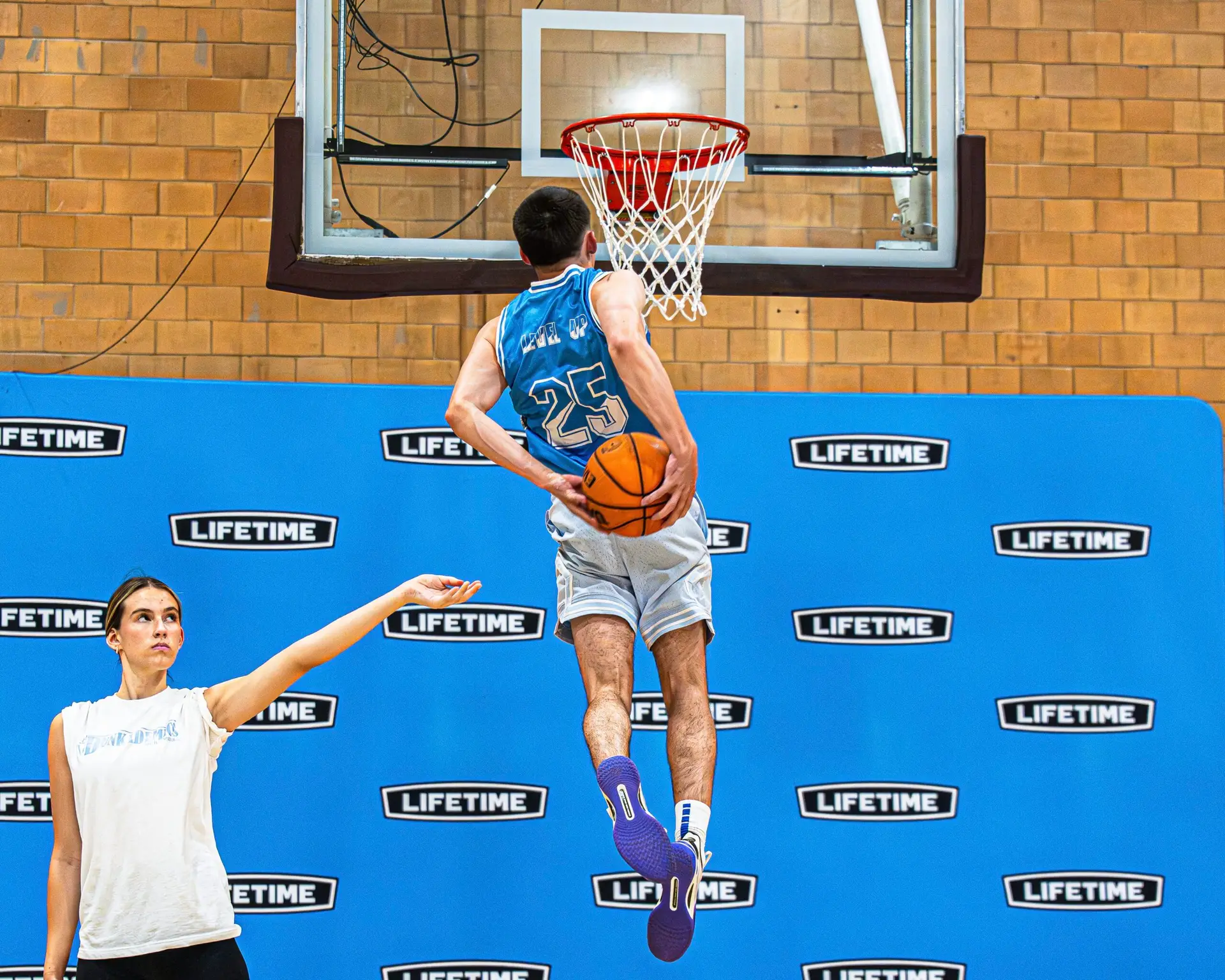
Piotr is 18, he is from Poland, and he is the youngest black band the sport has produced. His edge is not altitude. It is what he can do with the ball between takeoff and the rim, which is the part of dunking that takes the longest to build and cannot be bought with a training block.
“this man was hitting dunks that I can’t even fathom hitting. And your age, that’s impressive.”
Ethan Pimstone
Ethan then laid out the gap using his own timeline, which is the most useful comparison in the video because it is honest about himself.
“I got my first dunk at 17, and this man is 18 years old doing 360 Underboth, 360 Eastbay, 360 inverter which I just turned 23, I still can’t even do all that.”
Ethan Pimstone
Every dunk on that list is a 360 with a second move layered inside it. Under both legs. Between the legs. Each one takes a full rotation plus a ball move plus a landing, and Piotr is doing all three of them at an age when most dunkers are still trying to make their first clean windmill look repeatable.
“he’s levels ahead of where most people are at, and he’s already close to the top of the game.”
Ethan Pimstone
Piotr’s answer about Ethan ran the other direction, and he found a way to make a compliment out of a criticism.
“His jumping ability probably because even though some people are saying that your technique isn’t perfect… you’re still jumping like 52 and a half.”
Piotr Zawiślak
That has been the take on Ethan in comment sections for two years. Piotr’s read is that the number happens regardless, so the form debate matters less than the training behind it. Coming from a dunker whose whole reputation is built on technical precision, that is a real concession.
Let Us Trade
“Let’s trade. We’ll trade some talents. And then we’ll both be top of the game.”
Ethan Pimstone
This is the line that will get clipped, and it is funnier than it looks because both of them are completely serious about the deal. Ethan wants the bag. Piotr wants the inches. Neither of them is confused about which side of the trade they are on, which is rarer than you would think among dunkers at this level.
The Part Worth Saving
Ethan then did something most people in these interviews forget to do. He stopped complimenting and started asking. How are you able to do all those dunks. Is it hand speed training or is it just reps. Rim or wall. How often.
Piotr answered all of it, in order, with no hedging. This is the full breakdown.
“So I used to be doing a lot of low-rim dunking.”
Piotr Zawiślak
At 15 and 16. That is the base layer, and it is the one everybody underrates. A low rim buys you air time, and air time buys you repetitions of a movement pattern that a full rim will not let you practice yet. He was building the bag years before his jump could support it.
“I’m having two dunk sessions a week… And I’m doing a lot of hand speed drills.”
Piotr Zawiślak
Two dunk sessions a week, with heavy lifting around them. Ethan reacted to the number in the video, and so did I. The community assumption about a dunker with that bag is that he lives at the rim. He does not. He protects the jumping and puts his volume somewhere that costs his joints nothing.
“I’ve seen some drill at Jordan Kilganon’s channel. And I started doing it a lot.”
Piotr Zawiślak
Free videos on YouTube. A ball, a wall or a rim, standing still, running the motion of the dunk without jumping. Then Ethan asked the question that turns a nice answer into a usable one.
“Daily… when I’m before a important contest or event I’m bringing my ball to the gym. And I’m spending like one hour just doing it.”
Piotr Zawiślak
Daily. One hour of nothing but hand path before a contest. No weighted ball, ever, though he said he wants to try one. That is the entire program that produced the best hands under 20 in this sport, and there is not a single piece of equipment in it.
“And it shows. It’s crazy. It really shows.”
Ethan Pimstone
The Kilganon Loop
Here is what makes this specific week at camp unusual. Piotr says on this video that he trains daily off Jordan Kilganon’s drills. On a separate video at the same camp, he meets Kilganon in person, tries those same drills in front of him, and cannot get them while Kilganon does them with ease.
Kilganon explained on that video why the drills exist at all. He can only jump so much, so he went looking for a way to keep improving without adding vertical. The full conversation is in Kilganon on running out of rivals.
So the chain runs like this. Kilganon hits his jumping ceiling and invents a way around it. A kid in Poland finds the videos and runs them daily for years. The kid becomes the youngest black band in the sport, flies to Utah, and gets beaten at the drills by the person who made them. Both halves are on camera, filmed three days apart. That is not a story anybody would have caught if the two conversations had not both been recorded and written down.
What This Says About Where the Sport Is
Ten years ago, an 18-year-old with this bag would have been a rumour on a forum. Piotr learned from a free channel in another country, built his hands on a low rim, and arrived at an American camp already at black band. The pipeline is now open in both directions, and the tools that produced him cost nothing.
Ethan’s side of it matters too. He got his first dunk at 17, was coached by his brother Jordan, and is now the world record holder at 23. Neither of these guys came up through anything resembling a traditional path, and they met in the middle at a camp in Salt Lake City.
They each wrote their own version of this conversation: Ethan on trading talents and Piotr on the craziest jumper. Dunker Spotlight covered why opposite superpowers work on camera, Athlete Spotlight took it to athletes outside dunking, and BlitzMetrics broke down why the routine travels.
This got filmed because Dennis Yu and I ran a session at camp for 76 campers on how athletes show up on Google and in AI tools, then offered to interview anybody who wanted it. The method is documented in the repurposing system from camp.
Go do the drills. That is the takeaway. The world record holder heard the answer and said he was taking it, and he already jumps higher than you.