Connor Barth
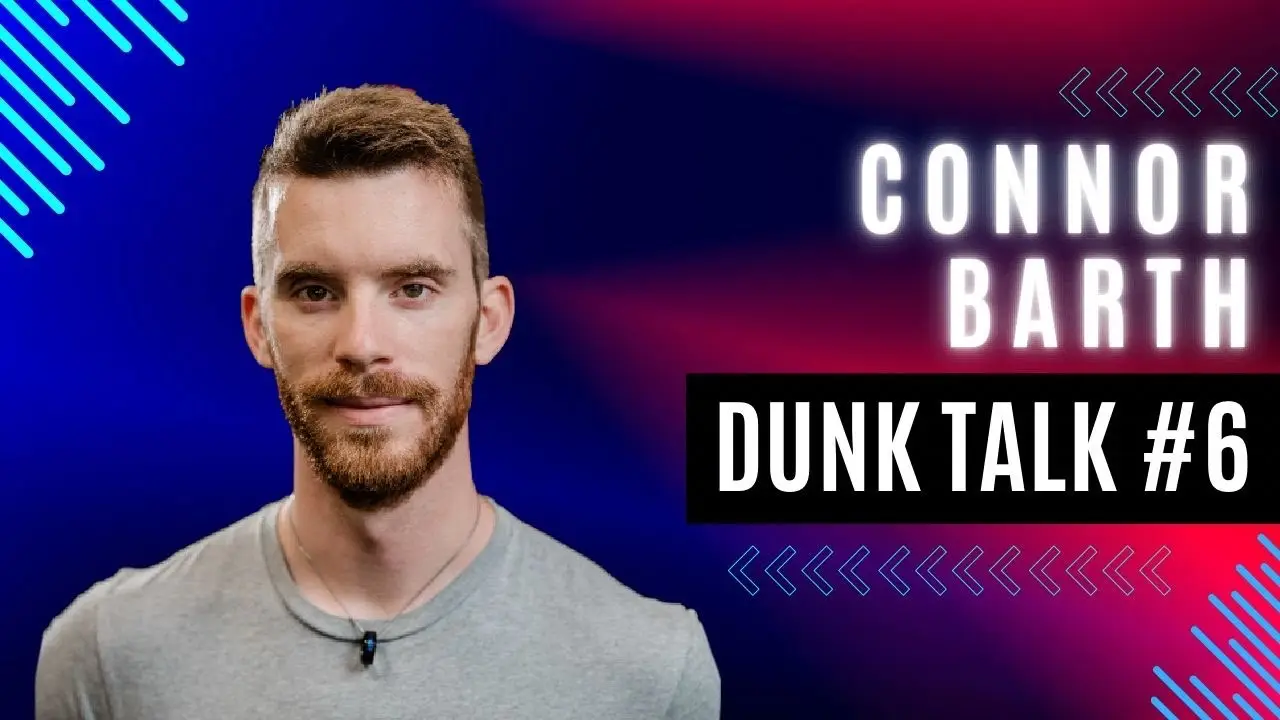
A well-known dunker whose name helped inspire a generation of jumpers. He opened up about his dunk journey, training philosophy, and recovery from cancer.
About Connor Barth
Connor Barth was the first professional dunker Dunk Talk ever had on the show. He is 6’4″ with an 8’3.5″ standing reach, a Dallas kid raised on the Mavericks and on Gerald Green, and he recorded episode 6 with Dylan and co-host Hunter Castona, who called him one of his biggest inspirations because the two share the same plant.
It started with an adjustable hoop in the driveway. He could not shoot on ten feet, so the family played at seven, and once he could dunk on seven he refused to let anyone raise it. He was a baseball player until seventh grade and went undefeated across three years of middle school volleyball. His first dunk, a fingertip rim grazer off one foot, came at the end of his freshman year, and he grew about three and a half inches between eighteen and twenty-two. He played street ball late at night and finished his shooting drills by jumping until he could not walk.
The pivot came at twenty-two. He was playing semi-pro basketball with the Dallas Heat, had accepted the NBA was not coming, and was far enough into a Navy process that recruiters wanted him building nuclear submarines. He turned it down, found Steven Celi on YouTube and then Isaiah Rivera and CJ Champion, and gave himself two years to make dunking work. Jordan Kilganon handed him Bounce Kit because he thought Connor had potential, and partly because Connor would not stop bugging him. Six months of lifting took him from the low 30s to the high 30s.
Dunk Camp 2018 was do or die. He could not afford it and had to talk his dad into paying, promising he would never ask again and would work for him full time if nothing came of it. At the day zero session, gym lights off, he barely warmed up, tossed himself a lob and crushed a between the legs in front of a room of pros who had no idea who he was. He won the camp contest with a crown he had landed for the first time that same day, and the windmill off the wall he hit right afterward made SportsCenter and turned into contest invitations.
He moved to Florida to work with ATG and climbed from the low 40s to the mid and high 40s. By early 2022 he was jumping 47 to 48 off a standing vertical of only about 33, which is why so much of his bag comes off a lob, and that year produced the behind-the-back left hand now at 80 million views. His signature is the reverse windmill, a dunk he could physically feel himself pause in the air on. The hardest thing he has landed has no proper name: a lob caught, taken behind his back with the right hand, passed off the backboard to his left hand, and dunked.
Then came the diagnosis. Cancer was confirmed the September after dunk camp, surgery followed that month, and three and a half months of chemotherapy ended two weeks before this recording. He was told he was cancer-free the week they spoke, and had rebuilt as far as thirty-minute walks and a single dunk at the gym. The upside, he says, is that he now knows from the inside what the clients he coaches feel coming back from nothing. He set his targets at a 48 to 50 vertical and a 2.25x bodyweight squat, but the goal he talks about most is dunking at sixty.
On Dunk Talk