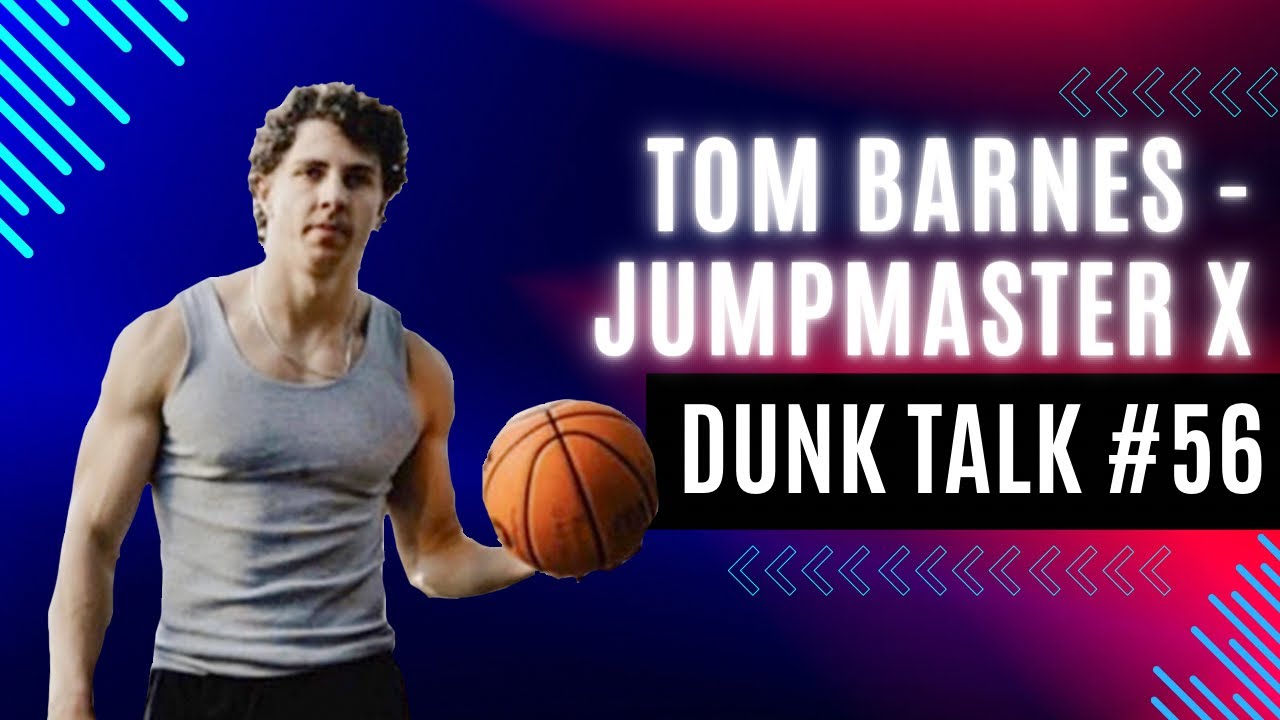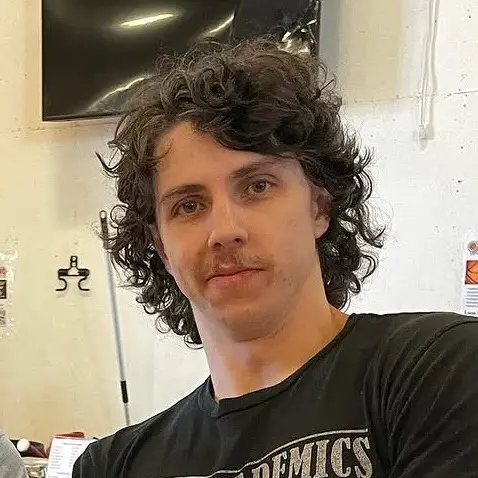
Tom Barnes
Founder of JumpX, one of the world’s most respected dunk and vertical-jump coaching systems. He shared his own dunk journey and how he built JumpX.
About Tom Barnes
Tom Barnes grew up in Perth, Australia, where the school year runs in four terms and each term is a different sport, so he played Australian rules football, field hockey, cricket, track and basketball before settling on basketball around 12 or 13. At 17 he decided he found dunking more exciting than the sport it belongs to. The dunker who did it was Steven Celi, 5’10” like Barnes, barely touching rim before he was windmilling and going between the legs. From day one Barnes filmed everything, gym sessions included, with the camera balanced on a water bottle because he did not own a tripod.
His first dunk came about four months in, at night, on the home hoop under floodlights his dad had installed so he could dunk after homework. Second or third attempt, he threw it up and put it down, called his mom outside, then punched a two-hander 30 seconds later on pure adrenaline, worth about two inches by his estimate. At the start of 2019 he was rim grazing one-handers; he hit his first Eastbay at the end of that October, 11 months later. He remembers that year as an obsession, shaking through a university practical because he had a dunk session afterward.
He got on coaching inside the first four to six months, which meant Isaiah Rivera and John Evans at THP back when that was the whole roster, and he still credits how much they answered. He also took a sport science degree at Curtin University, which taught him physiology and, by his own account, close to nothing about vertical jump coaching. Watching lifters like Jonathan Clark taught him he was not strong, and he fixed it: a 310 kilogram paused deadlift, a 200 kilogram raw back squat, a 130 kilogram power clean he has hit twice, and a 155 kilogram bench, at a body weight around 78 kilograms.
In 2022 he herniated his L1-L2 disc. The pain was in his glute rather than his back because the disc was pressing on the nerve, and for a while he could not get out of bed. He was back to his all-time best jumping in about three months, but the weight room took a year to 18 months. He calls that stretch depressing, and it reset how he treats a session: every dunk day is a gift, even the bad ones. It is also why his favorite session ever is the under both, a back-dominant dunk he hit after that injury, on four hours of sleep, screaming.
His other landmark is a bet. He and Travis Reynolds raced to a behind-the-back dunk, loser buys Burger King and hands over the crown in a photo. Reynolds won by about a month, and Barnes, whose country does not have a Burger King, still owes him the meal. They trusted each other on rim heights, which matters to him: in Perth almost every rim is 10 feet on the dot, because there are no gym-attached courts with slightly low hoops, only regulation ones. He tested 47 inches a month before this episode with a flight time between 0.93 and 0.95, measured strictly and deliberately undershot, and his max now reads 48. Fifty is the number he wants.
JumpX started as two coaches. Barnes and Austin Young had been dunking together and talking training for a year or two, and as soon as Barnes graduated they realized their separate plans would work better as one. It became Jump Master X when Jordan Kilganon joined, a merge they spent months quietly building so nothing would break mid-program for their athletes. Barnes coaches Dylan Haugen, among others, and will not call himself a pro until he does FIBA or beats one in a contest. Asked what success looks like, he did not lead with his own numbers: dunking is underpaid for the work it takes, and he wants to leave something behind that makes it easier for whoever comes next.
On Dunk Talk