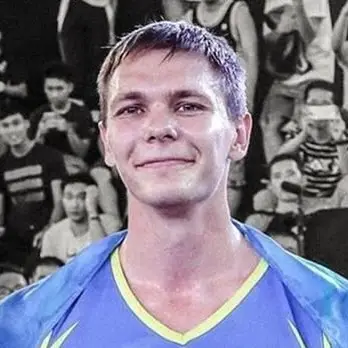
Zach Velis on the Misdiagnosed Knee Injury, the Bone Fragment Surgery, and the Road Back

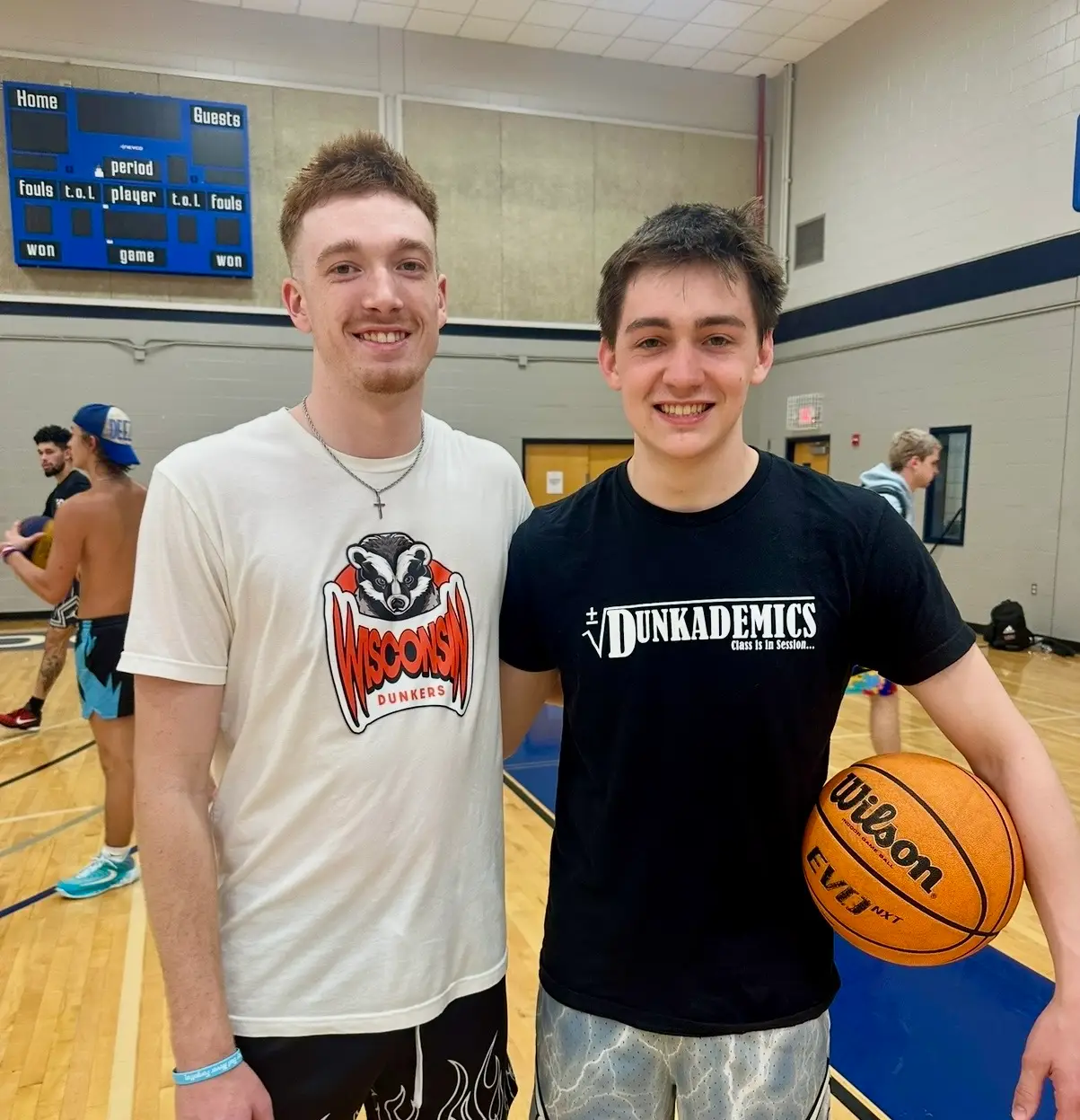
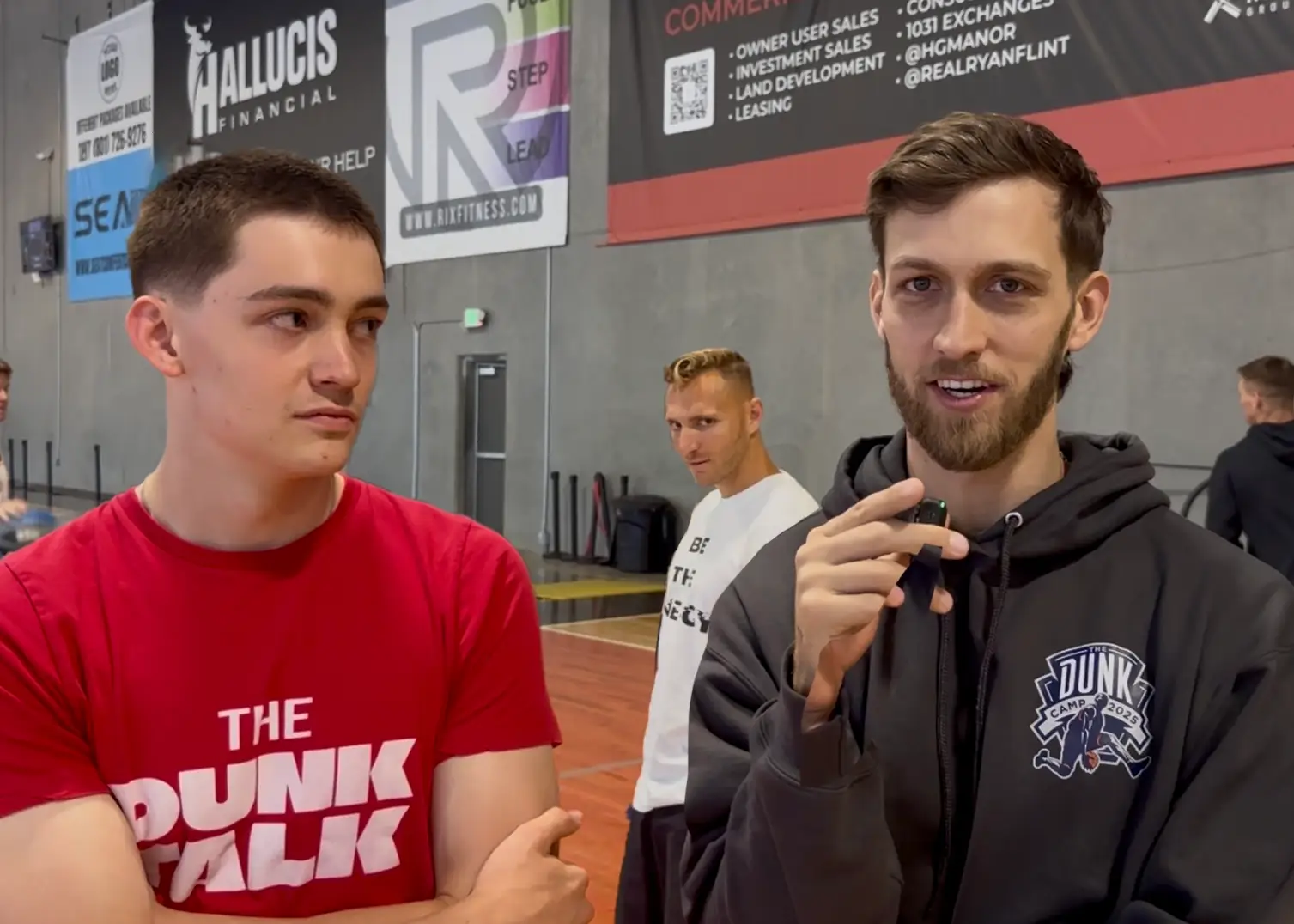
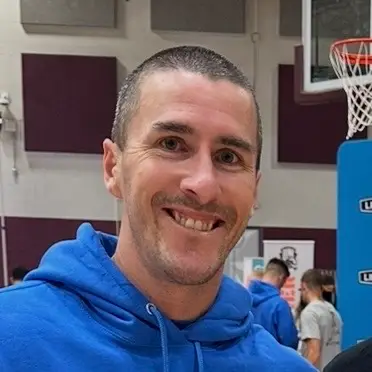
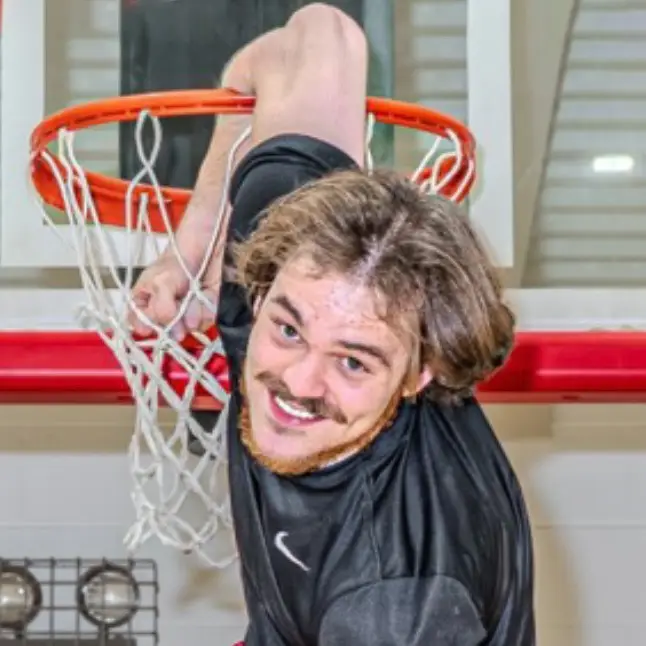
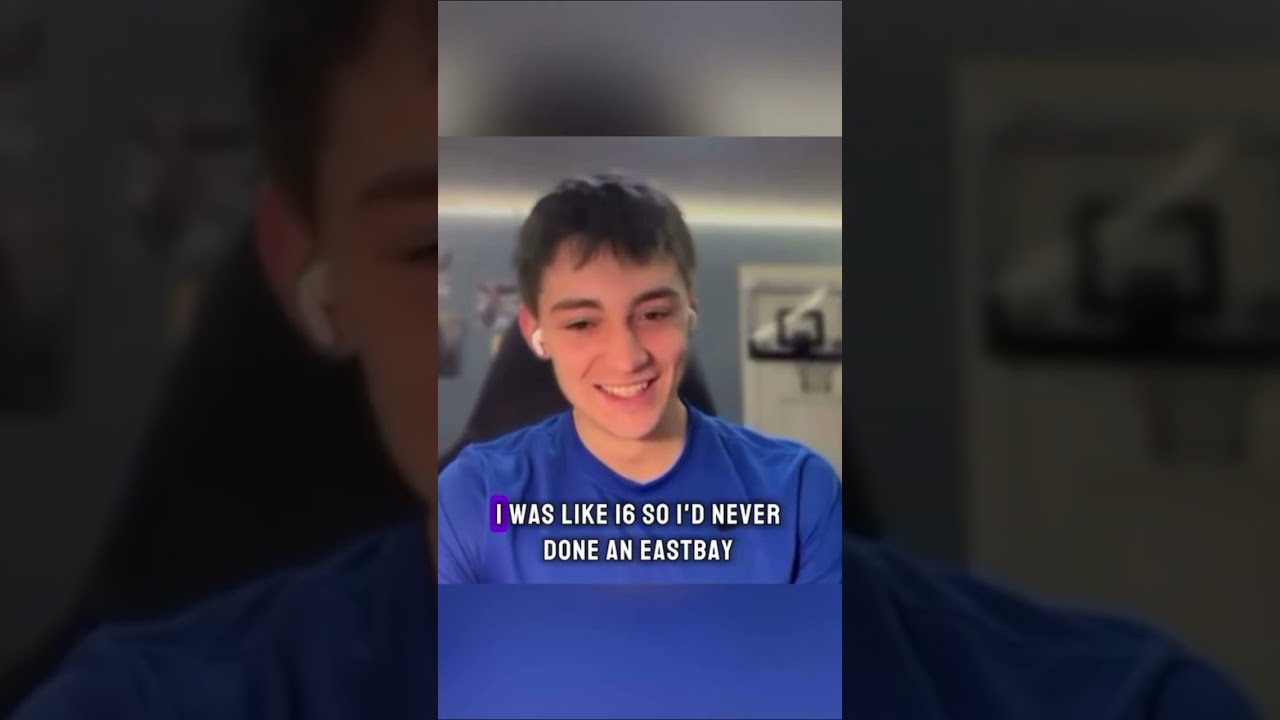
This is episode 5 of the Dunk Talk Podcast. I’m Dylan Haugen (I’ll be competing in Shaq’s DunkMan League as the youngest pro dunker in the world this summer), and the guest is Zach Velis, a 6’1.5” 19-year-old dunker from Northern Virginia who was one of the very first people I ever talked to in the dunk community. Same plant as me, two years older, hitting dunks I was still chasing when we first met. The reason he’s sitting down for this episode now is to walk through one of the strangest dunker injuries I’ve come across: a misdiagnosed patellar tendonitis that turned out to be a piece of bone left over from childhood Osgood-Schlatter disease, which required surgery one week before this recording. He had been off and on rehab for nearly two years before they figured out what was actually going on.

How we first connected

Zach was one of the earliest dunkers I ever messaged. He’s the same plant as me (left-right) so I was studying his footage closely when I was just learning to jump off two. He got his first dunk at 15 and was dunking consistently by 16. I got mine at 13 but didn’t get consistent until later, so on the timeline our paths crossed pretty quickly. We met in person at Dunk Camp 2022. He was already pretty deep into the community by then.

Summer 2022: peak Zach

The summer of 2022 was Zach’s prime. He was hitting Eastbay and 360 Eastbay pretty consistently and was about a week out from The Dunk Camp in Utah. He had outdoor-tested 37.5″ the year before. He had every reason to think he was about to win the 10′ contest at camp as the youngest competitor in the field.

Then, a week before camp, he was low-rimming on 8′ at maybe 10 percent effort. Doing a between-the-legs at six inches of jump height. His right knee landed weird and twisted with a sharp pain. He’s a left-right jumper for two-foot, but he uses his right leg as the planting leg for off-one, which made the injury particularly inconvenient. He’d already paid for camp. It was two days out. There was no refund.

Dunk Camp 2022 with a busted knee

Zach went to camp anyway. Took the first few days off, ate a lot of Advil, and figured he’d just need to hold it together for the 10′ contest. He tested 35″ at camp. For reference, he’d tested 36.5″ indoors the year before. The 35″ with a knee that was actively in pain told him most of what he needed to know about the injury but he didn’t process it yet.

He still made the 10′ contest. He hit a side-tomahawk Windmill off a lob from Jordan Kilganon, then a two-handed Windmill he had to try three times to land. He did well considering the circumstances. I watched the contest and didn’t know how hurt he actually was until later.

LA after camp, then home for the misdiagnosis

Right after Dunk Camp 2022, Zach went to LA to dunk with Elijah Bonds and to dunk on the Hoop Bus. He had planned the trip months earlier and didn’t want to pull out, so he pushed through pain that was already telling him something was wrong. He came home and saw a specialist who diagnosed it as patellar tendonitis. Every other dunker he talked to, including John (from THP), said the same thing: probably patellar tendonitis. Zach started doing all the standard rehab work: isometrics, slow strength, the protocol everyone with jumper’s knee runs.

It didn’t work.

The cycle: rehab, reinjury, repeat, for almost two years

The next year and a half to two years was a loop. Zach would rehab for three to six months, sometimes hit a zero-out-of-ten pain rating on the rehab exercises, go try to jump again, and have the same flash of pain show up the moment he loaded the knee. He’d see another specialist. Same diagnosis. He’d rehab again. Same loop. People in the dunk community kept telling him “you’re not doing your isometrics hard enough” or “tendonitis is something you manage, not heal.” He didn’t blame anyone for saying it. He’d say the same thing too. But the diagnosis didn’t match what he was experiencing.

His pain was different from regular tendonitis in three ways. First, it started from a specific landing, not gradual overuse. Tendons are insanely strong and don’t get acutely injured the way muscles do. Second, the pain didn’t feel like soft tissue pain. It felt like something bony hitting against something bony every time he jumped. Third, it never trended down in the way managed tendonitis does. Every flare-up was right back at maximum pain. Walking to class in college, he was limping. That’s when he decided to keep looking.

The third specialist, and the diagnosis nobody else caught

Zach went to a third specialist (a doctor who works for the Washington Commanders and George Mason Athletics, so legitimate). The MRIs and X-rays were the wake-up. Zach’s patellar tendon was completely intact. His ligaments were intact. His meniscus and cartilage were intact. There was nothing structurally wrong with his knee in the way a regular dunker injury looks.

What the doctor did find was a piece of bone left over from Osgood-Schlatter disease, which Zach had as a kid. (Osgood-Schlatter is a growth-plate thing where one part of the bone grows faster than its anchor and creates a visible bump. Most kids grow out of it. Some don’t, and the extra bone stays there into adulthood. Isaiah Rivera has talked about having it too.) Somewhere in Zach’s landing during that low-rim between-the-legs, that extra bone fragment shifted or started interfering with how his tendon tracked over the front of the knee. Every jump after that re-irritated the same spot, and no amount of isometric work was going to fix it because the cause wasn’t the tendon.

The fix was surgical. The procedure splits through the patellar tendon, removes the extra bone fragment, and closes everything back up. Uncommon as far as procedures go (people with persistent post-childhood Osgood-Schlatter symptoms into their late teens or twenties sometimes need it), but the result is that the actual structural cause is gone and the tendon goes back to operating normally.

Zach had that surgery one week before this recording. He’s now starting physical therapy. He can’t bend his knee. He’s walking with a straight leg and a brace. The full rehab is around six months.

Why this story matters for any dunker chasing a diagnosis

Two takeaways for any dunker reading this with a persistent knee issue that isn’t responding to standard tendonitis rehab. First, the dunk community’s default diagnosis is going to be patellar tendonitis or tendinopathy, because that’s what it almost always is. That’s not bad advice. It’s just incomplete when the actual cause is something else. If you’ve been doing the protocol correctly for six months and getting nothing, get a second and third opinion from doctors who treat athletes for a living. Second, listen to the qualitative description of your own pain. Tendonitis is a soft, achy, manageable pain that responds to load. A bony, sharp, “something’s being hit” pain that doesn’t respond to load is something else. Zach said it for years before anyone listened. The pattern is worth catching faster on yourself.

Backwards: how Zach actually got into dunking

Zach always liked basketball and loved dunking. The pull was the rim itself. He was at the pool dunking on the side of the pool. He was low-rimming whenever he had access to a hoop. His real launch was Covid. He was 15, had a hoop in his backyard, started doing different dunks on the 8′ rim and recording all of them. The reason he made his Instagram was specifically to organize his own dunk videos as a personal gallery, not as a public-facing account. He wanted a record of every first-ever dunk he hit: first between-the-legs on 8′, first behind-the-back, all of it.

The first professional dunker he ever saw was Jonathan Clark (sometimes referred to as “J”), a left-right dunker who’s been productive in the scene for a long stretch. Through Jonathan he found out about Dunk Camp, and from Dunk Camp he found the broader dunk community. Zach didn’t set out to be in the community. He set out to organize his own footage and the community pulled him in.

January 1, 2022: the session that got Zach on Overtime

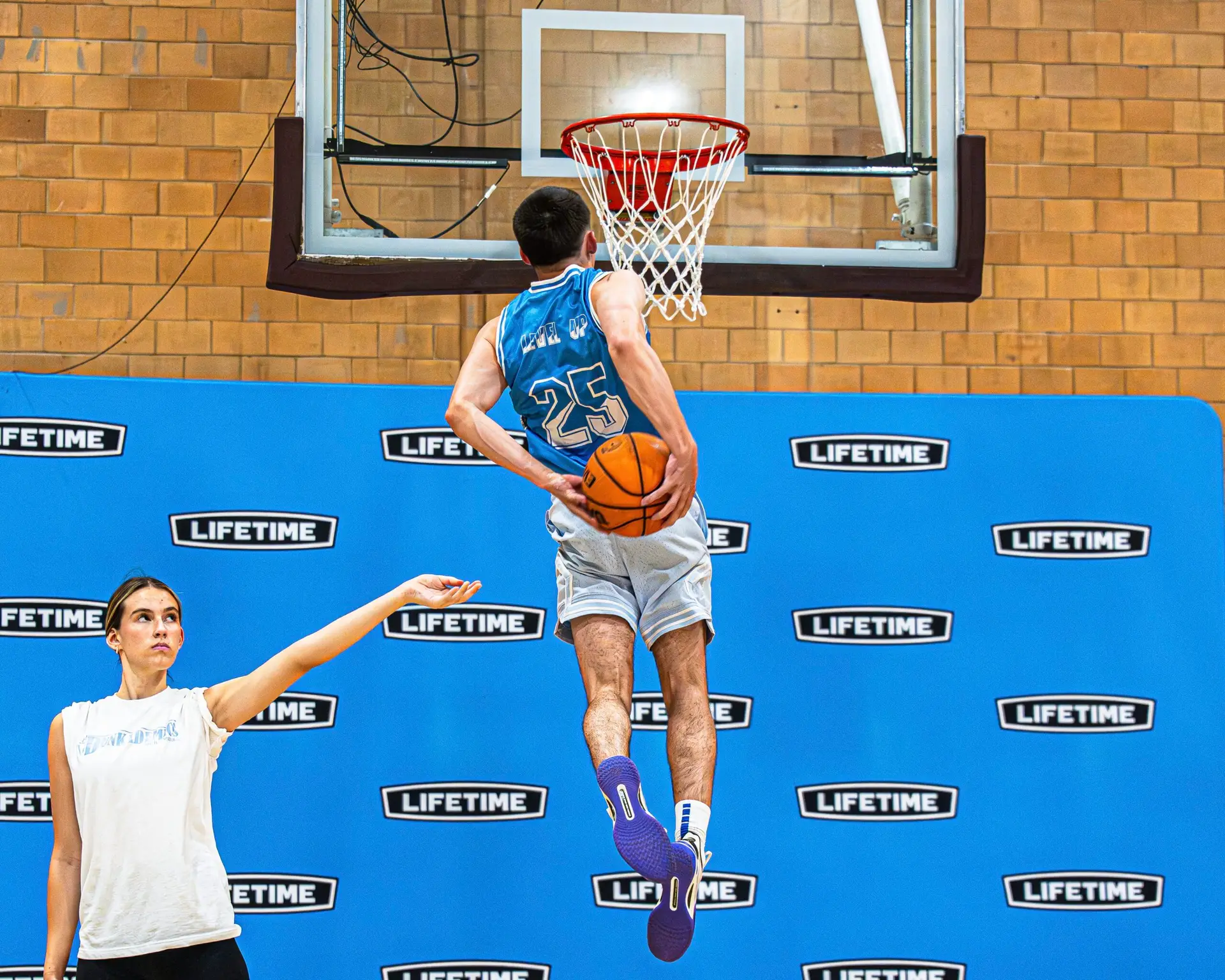
One of Zach’s peak sessions was January 1, 2022. He hit an off-the-wall Eastbay and an off-one Eastbay (off-one Eastbay is rare for him because he’s primarily a two-foot bounce) in the same session. The off-the-wall ended up posted by Overtime on Twitter and TikTok. Later in 2022 he stacked an Elbow dunk, the Vince Carter reverse 360 Windmill, a 360 Eastbay, an over-somebody Eastbay, consistent Eastbays off the backboard, Windmills, and a 360 Scoop with his right hand (he’s left-handed, so the right-handed 360 Scoop is the harder direction). The two-handed Windmill with the head-tap during a rec-league game that got him posted on Overtime is his favorite in-game dunk.

It also got him teed up.

Honest about rim heights

Zach’s position on rim height honesty matches mine. He rounds to the nearest half-inch on every post. The thing he doesn’t do is pretend a 9’9” is 10′. The nuance is that 9’10.5” is generally where the dunk community starts counting things. There’s a real difference between 9’9” and 10′, and dunkers who pretend the rim is 10′ when it’s 9’9” are doing themselves a disservice. Practicing on 9’10.5” or 9’9” and being honest about it is fine. It’s how a lot of progress gets made. The line is the lying, not the low rim.

The North Carolina session: dunking with Kilganon, Dan, and Obi

One of Zach’s pre-injury peak experiences was the North Carolina session with Obi (6’6” with a ridiculous standing reach), Kilganon, Dan Gross, and Travis Reynolds (who was hurt that day). Going into the session Zach was already framing it as “the best dunker in the world is going to be in this gym.” What surprised him was Dan, who he describes as top-five or top-ten in the world without the name recognition to match.

Zach’s honest summary of that session: he was 16, was struggling to hit an Eastbay, and watched these guys do them off-vert as warmups. He came out of it knowing he had time on his side and also knowing how much actual room there was above his ceiling. That mindset is the one that produced his prime stretch later that year, before the knee.

What Jordan Southerland did at Dunk Camp 2023

Zach didn’t go to Dunk Camp 2023, but he watched the highlights closely. The one that stuck with him most was Jordan Southerland (1FootGod) running the Gauntlet (Southerland’s full episode on his progression is here). The Gauntlet is the black-band level: 360 Eastbay, Eastbay off the backboard, 360 behind-the-back, Scorpion, Underboth. Southerland warmed up by running the whole list off-one. Off one foot. He didn’t miss. That’s the gap between an elite amateur and a pro that most dunkers in the community don’t fully appreciate until they see it in person.

I had the same kind of realization at the 2023 camp, watching Kilganon and Southerland go off, and Isaiah Rivera casually do right-left and left-right at the same camp despite dealing with injury stuff of his own.

The mental block from chronic injury

Zach also said something on the episode that anyone who has dealt with chronic knee pain will recognize. Even when the pain is at a one or two out of ten, the mental impact is bigger than the physical. You catch yourself not jumping at 100 percent because there’s a part of your brain that’s flinching from the previous flare-up. I’ve felt this with my own quad tendinopathy. I’ll feel something on the back of my knee from a hard 360 block-foot landing and the next jump after is involuntarily 80 percent. That’s real, and it’s a meaningful component of why a chronic injury is harder to come back from than the imaging would suggest.

What’s next for Zach

The current Zach roadmap is rehab first, basketball recreationally second, and dunking last. He’s not in a rush. His tendon, his ligaments, his meniscus, and his cartilage are all completely intact (which is the whole reason this whole arc has been so frustrating). Realistically he expects to be functional for day-to-day life by the end of this summer and back to playing basketball and dunking sometime in 2025. He’s also planning to post rehab updates on his Instagram as he goes, which is the kind of documentation the community could use more of.

Zach is “Zach V Dunks” on Instagram (handle is “ZacVDNX”). He hasn’t been posting a lot recently for obvious reasons, but follow him for the comeback. He’ll be back on the show as his recovery progresses. Next episode is with Connor Barth, who has his own injury and comeback story worth hearing. I’ve also got a lot more dunkers lined up. Leave a comment if there’s someone specific you want me to interview.

Scroll to Top