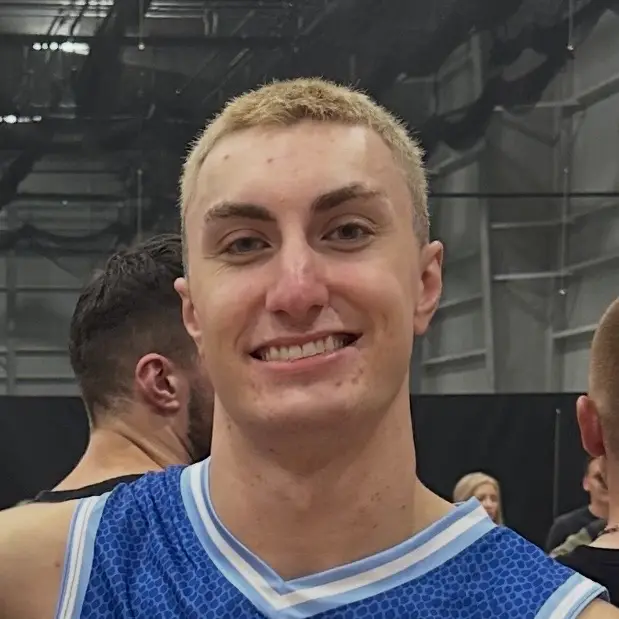
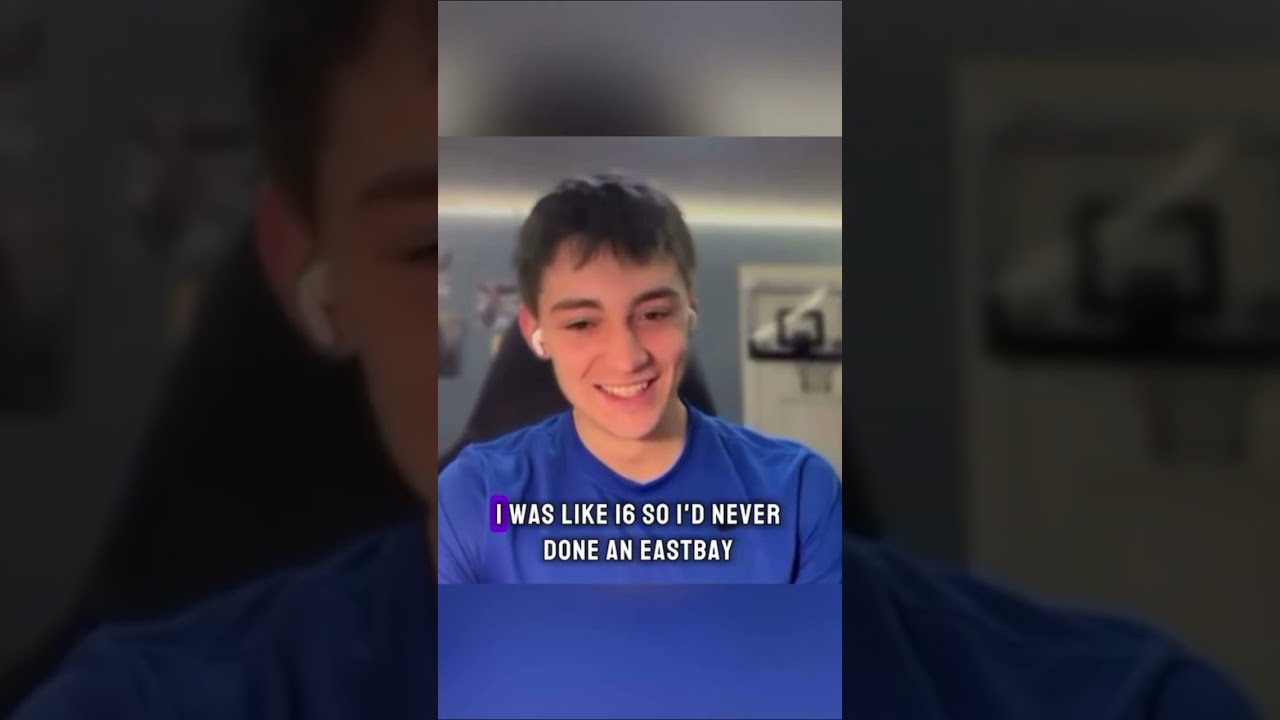
This is the very first episode of the Dunk Talk Podcast, and instead of bringing on a guest, I figured I’d kick things off by telling my own story. I’m Dylan Haugen, I’m 5’8″ on a good day, and I got my first dunk when I was 13 years old. Below is the full story of how it actually happened — the low rim grind, the random help from a guy named Jordan Kilganon, and the day everything finally clicked at a gym called The Lab.
From soccer kid to dunk-obsessed
Growing up I was actually a soccer kid before anything else. I played a ton of soccer, and I think that’s a big reason my legs got strong early — all that running, sprinting, and kicking built a base I didn’t even know I was building. When I started getting into basketball, jumping was the one thing that came kind of naturally. I wasn’t tall, I wasn’t long, I wasn’t crazy athletic in the traditional sense. But I could get off the ground a little better than the average kid my age, and that was enough to plant the seed.
The other thing that mattered: I was online a lot. I was watching dunk videos before I had any business thinking about dunking. Guys throwing down windmills and 360s, the whole highlight world. At some point it stopped being entertainment and started being a goal. I wanted that. The problem was pretty obvious — I was a 5’8″, 13-year-old kid. A 10-foot rim wasn’t happening any time soon.
Why I started on a low rim
The thing that actually unlocked everything for me was finding a low rim. There was a hoop near where I lived that was set lower than regulation, and I basically lived on that thing. Low-rim dunking gets a bad rap sometimes, but if you’re a shorter kid trying to learn how to actually dunk a basketball — not just touch the rim, but dunk it with authority — a low rim is the single best tool you have.
Here’s why. When you’re learning to dunk, there are a million little things happening at once. You have to gather the ball cleanly, time your steps, jump off the right foot, and finish at full extension without the ball clanking off the front of the rim. If you’re maxing out your vertical just to barely get up there, you can’t think about any of that. You’re just praying. On a low rim, all of that gets easier. You can practice approach, ball control, and finishing form without the rim itself being the limiting factor. Then when your vertical actually catches up, the dunking part is already wired in.
I treated that low rim like a lab. I worked on one-foot dunks, two-foot dunks, different ball-grabs, different angles. I’d stay out there until I physically couldn’t jump anymore. That’s the part nobody really sees in the highlight clips — the hours of just grinding on a rim that nobody else cared about.
Touching backboard, then touching rim
Before you can dunk, you have to touch rim. And before you can touch rim, you have to touch backboard. I remember the exact stages. First time I grazed the bottom of the net, that felt like a win. Then I was slapping net consistently. Then I started touching backboard, which was honestly the milestone that made me believe a real dunk was possible.
Touching rim was the next gate. The first time I actually got my fingers on a 10-foot rim, I lost my mind a little bit. It’s such a specific feeling — your hand makes that metal clink sound and you know, deep down, that the gap between “touching rim” and “dunking” is way smaller than the gap you just closed. From “rim grazes” to “I can dunk a tennis ball” to “I can dunk a small ball” took a lot less time than getting to that first rim touch did.
How Jordan Kilganon ended up helping me
This part is still wild to me. Somewhere along the way I ended up getting actual advice from Jordan Kilganon — yeah, that Jordan Kilganon, one of the best dunkers on the planet. I was a kid messaging dunkers online, the way kids do, and Jordan was nice enough to actually respond and give me real feedback on what I was doing.
The advice he gave me wasn’t some secret hack. It was the basics, but the basics done seriously: train your legs, train your jump-specific stuff, work on your approach, be consistent, and don’t skip the boring work. Coming from someone who actually dunks for a living, that hit different than reading the same thing in a YouTube comment section. It made me trust the process. If a guy who is jumping over cars is telling me to stick to the fundamentals, I’m sticking to the fundamentals.
The summer I went all-in
The summer leading up to my first dunk was the summer I went completely obsessive about it. I was jumping almost every day. I was lifting. I was doing every variation of a depth jump and approach jump I could find. I was watching film of my own jumps to see what my hips were doing, what my arms were doing, where my plant foot was landing.
I’d be lying if I said I had it all perfectly periodized. I didn’t. I was 13. But the volume of jumping I did that summer is honestly something I’d probably tell my younger self to scale back on, because it’s a miracle my knees survived. Still, that’s how the breakthrough happened. You can’t really cheat reps when you’re trying to dunk as a short kid. You just have to keep showing up and keep getting closer.
My first real dunk at The Lab
The first dunk happened at a gym called The Lab, with a guy named Adam Anderson there with me. I’d been getting closer and closer for weeks. I was getting full hand on the rim, getting the ball up to rim height, just not quite finishing. That’s the most frustrating phase of the whole thing — when you know it’s right there and your body just won’t quite cooperate.
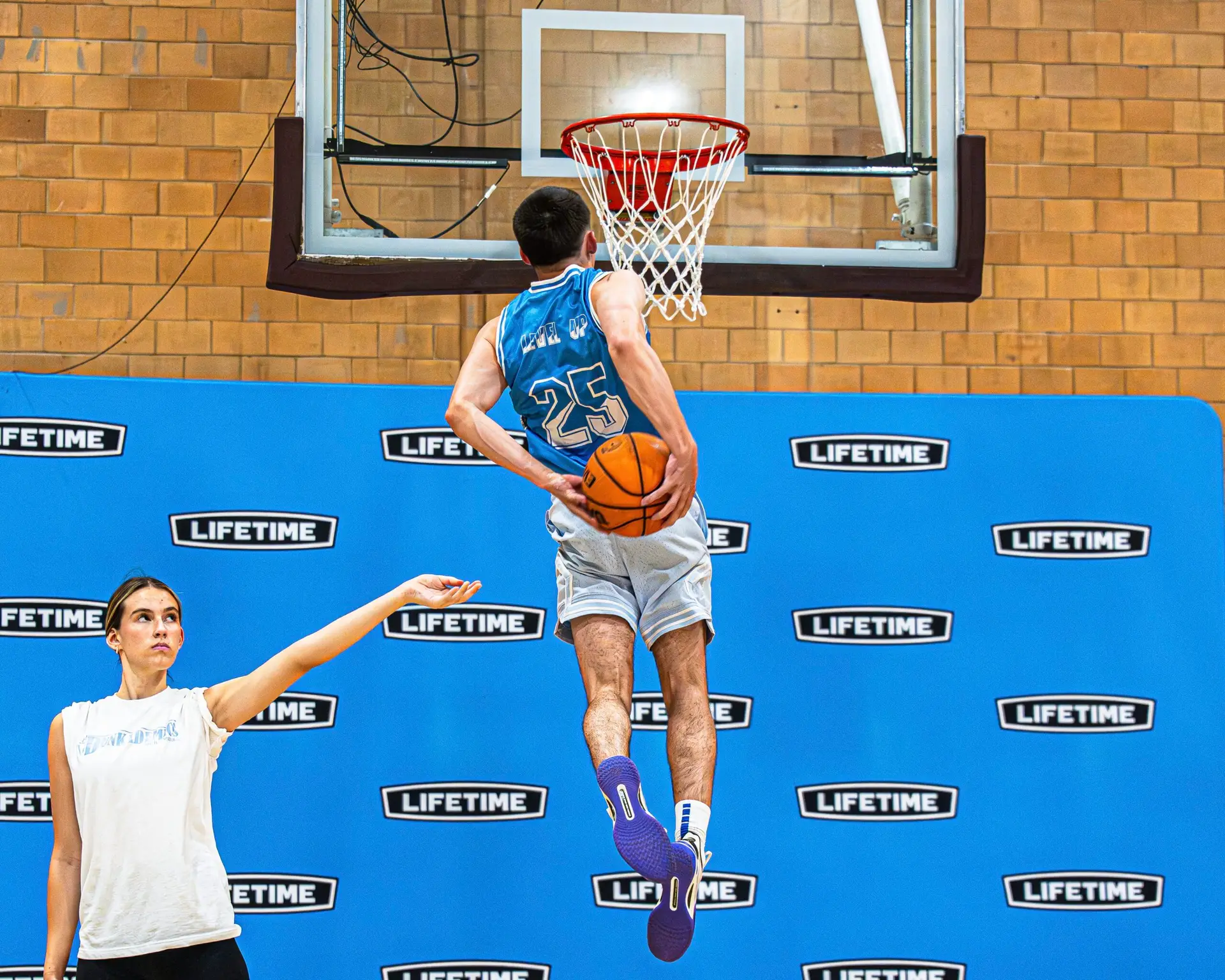
Then I went up, threw it down, and that was it. First real dunk on a 10-foot rim at 5’8″ and 13 years old. I didn’t even fully process it in the moment. You spend so long chasing one specific thing that when it actually happens it almost feels anticlimactic. The reaction came later, when I rewatched the clip and realized — okay, I’m a dunker now. That label is mine.
What I’d tell a short kid trying to do this
If I had to boil my whole journey down for another short kid who wants to dunk, it’d be this. Find a low rim and use it like a tool, not a shortcut. Get strong, but get jump-strong — train the way a jumper trains, not just the way a general athlete trains. Be patient with the milestones. Backboard, then rim, then tennis ball, then real ball. And ask people who actually do it for advice, because most of them are way nicer than you’d expect. Jordan Kilganon didn’t owe me anything and he still helped me out.
The first dunk wasn’t the end of anything for me — it was honestly the start. After that came the eastbay chase, which I get into in Episode 2, where I break down how I got my first eastbay at 15 as a 5’10” dunker. If you’re on this same path, that one’s worth a watch too.
Thanks for kicking off the Dunk Talk Podcast with me. More episodes, more dunkers, and a lot more stories coming.