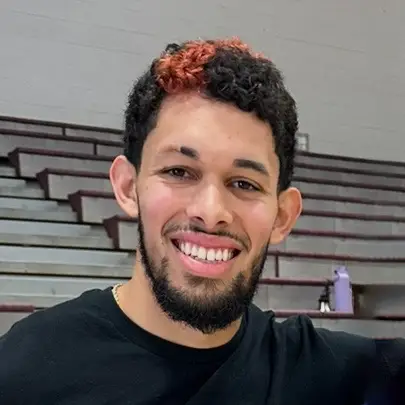
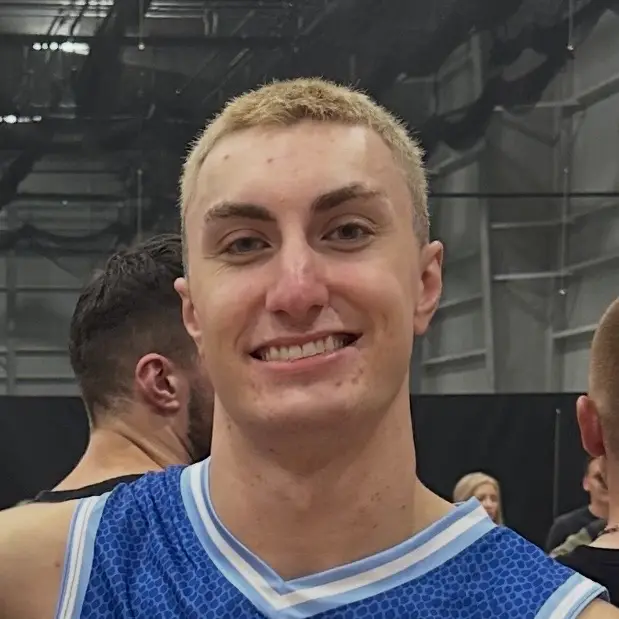
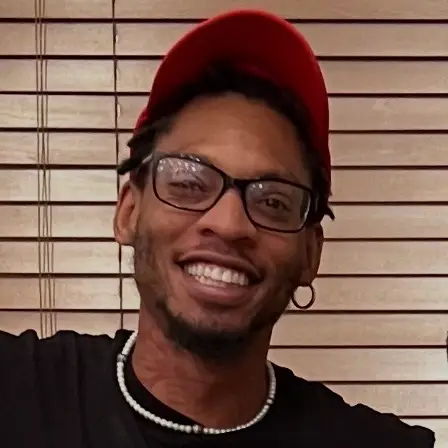
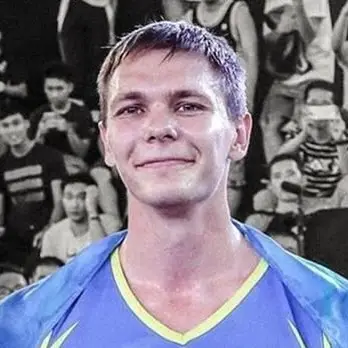
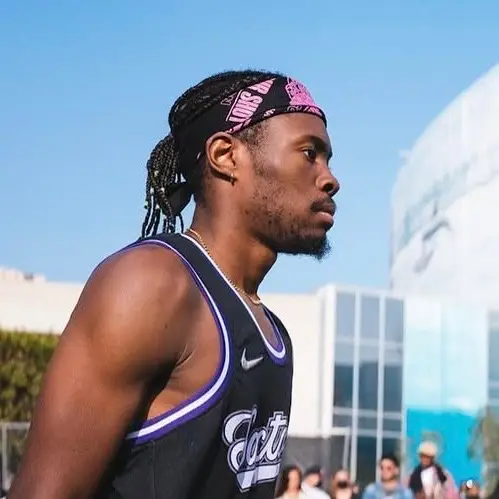
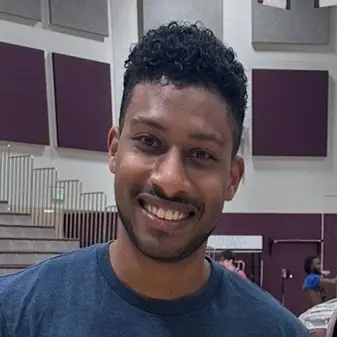
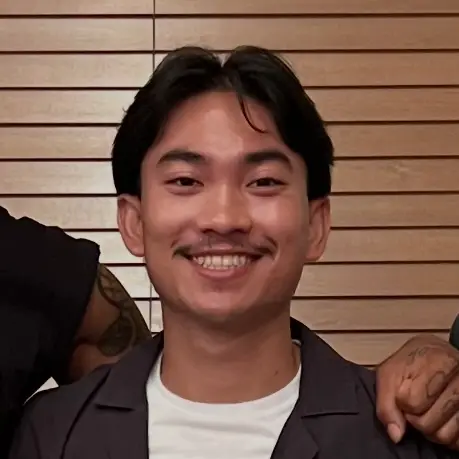
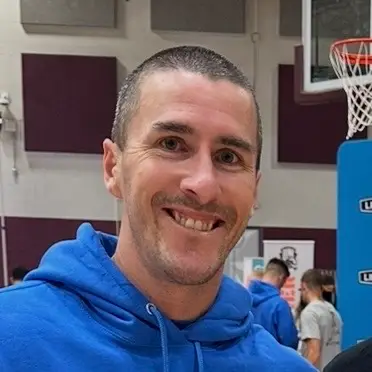
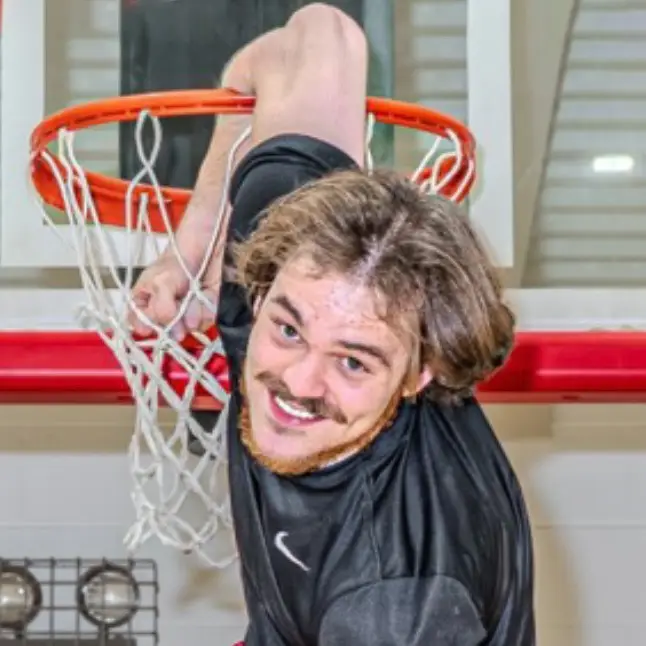
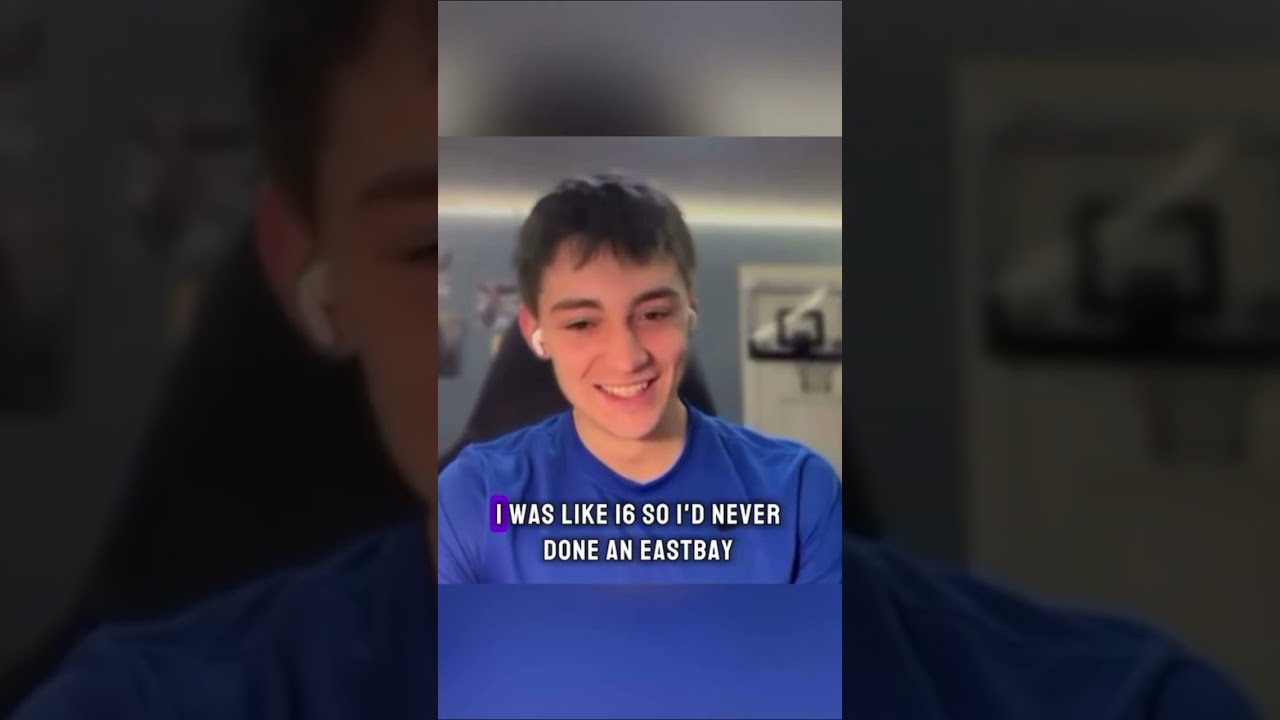
This is episode 35 of the Dunk Talk Podcast. I’m Dylan Haugen, joined by Hunter Castona, and the guest is Anthony Height, a 5’6” dunker from Inglewood, California with one of the most legitimate claims to highest jumper in the world pound-for-pound. Height is his real last name (yes, he gets asked). His resume reads like fiction: first 10’ dunk at 11 or 12 years old at 5’2”, a high-school broad jump record he broke as a freshman in his first week, the viral Venice Beach bell jump alongside Isaiah Rivera and Jordan Kilganon, and a 4.3-range 40 time, all built on essentially zero structured training until an injury forced it two years ago. He’s currently working back from stress fractures in both shins, and the conversation doubles as a study in what pure genetic outliers look like.
First dunk at 12, in a tie and vest
Anthony played YMCA “Junior Lakers” basketball at four, switched to football through elementary and middle school, then returned to basketball in high school because his school had no football team. The first dunk story is the most casual one we’ve ever had on the show: sixth grade, charter school uniform (ties and vests), morning pickup with the older kids on the connected high school’s court. Somebody shot, the ball bounced up, Anthony, at 5’2”, caught it and dunked it, ran back on defense, and thought, I could probably do that again. He assumed it was normal.
By 13 or 14 he could walk into a gym cold, no stretch, and throw it off the backboard to himself for two hours. He never built a trick bag in those years because he was focused on actual basketball; the Windmill and the off-the-backboard two-hander were the whole repertoire, and they were enough to make him the kid who dunked for everybody else’s entertainment. The genes are documented family-wide: his uncle dunked at 6’0”, and his dad casually told him recently that he used to start morning jogs by leaping over a four-foot gate, despite being no basketball player at all.
The numbers
- 40-yard dash: high 4.3s to 4.4s, hand-timed NFL-style in high school football.
- Broad jump: his high school’s record, untouched for 20-plus years before he broke it as a freshman.
- Standing vertical: around 33 inches, which he calls trash. Everything is in his approach.
- Reach and wingspan: 7’6” standing reach at 5’6” with a plus-1.5” wingspan, which is the quiet cheat code. (Dom Gonzales, two inches taller, reaches 7’4”.)
- Vertical at peak: 45-plus by his own conservative math, with a stated goal of getting back to 50.
The training history behind those numbers, for most of his life: playing basketball five days a week, five hours a day, dunking in between games. No squats, no program, no plyos. He started lifting seriously in college only because his 250-pound roommate and best friend insisted they do identical workouts (mostly upper body, since the roommate hated squats). The first structured jump training of his life came two years ago, after the injury.
Dunkademics at 17: a session with Chris Staples
Billy at Dunkademics found Anthony at 17 through a posted video and invited him to a session. Anthony showed up not knowing Chris Staples would be there and spent the session starstruck, insisting his best dunk was a Windmill and he’d rather watch. Chris was more impressed with him than the reverse. A second session with Chris and Jonathan Clark followed a week later, then a gap: Anthony played community college ball (Pierce, in the LA system), and pre-NIL rules meant a college athlete couldn’t take paid dunk work, so he went dark for two years. Billy reconnected when Anthony started posting again at 19, and the session that followed (with Hamilton, Dom, and a crowd of LA dunkers) opened the show-and-event chapter: Venice Ball shows, the first Ballislife East-West dunk show (which ended up being just him and Reemix), All-Star Weekend with Kilganon, Complex contests, HoopBus events.
Contests were rarer, and he’s philosophical about why: he has drawn an elite opponent literally every time. Three contests against Jordan Southerland (0-3, which he considers structurally unfair), plus matchups against Isaiah, Chris Staples, and Guy Dupuy. He’s never once been in an easy field.
The Venice bell
The viral clip most people know him from is the Venice Beach bell jump with Isaiah Rivera and Kilganon, and his behind-the-scenes version explains why it nearly didn’t happen: after the dunk contest portion, the three of them sat around for 45 minutes to an hour, fully cooled down, wandering and getting food, when the organizers suddenly rolled out the bell for the “to the top” segment. No warmup, no stretch, cold muscles, cameras rolling. The fact that the touches everyone has seen happened under those conditions makes them more impressive, not less. His advice if I ever get Isaiah back on the show: ask him about that day.
The quad tear and four months on THP
Anthony had never been injured in his life (one week of jumper’s knee, once) until two years ago: a partial quad tear in his right leg, on a landing, at a local gym. Pain was only a 3 out of 10 at first, so, being a football player about it, he played on it for a month, then tried to dunk on someone and the pain spiked to a 9. The fix came through THP: he didn’t even text John Evans, just entered his card on the website, and John, who’d seen the injury post, messaged him within the day and personally managed his first month. The programming was heavier lifting than he’d ever done, no formal load-management phase (the tear was partial and he had strength through the leg), starting light and building as trust in the leg returned. He was playing full speed and self-bouncing in games by month three, back in about four.
The pattern from Isaiah’s episode and Dom’s repeats here: a frightening share of the elite dunking world runs through John Evans’ DMs at their lowest moment.
The stress fractures (and why isos don’t help)
The current injury is the harder one: stress fractures in both shins, worse in the right. The medical warning he got was blunt: jump “real good” one more time and it might break through. His response: “I kind of like my leg, please,” followed by nearly a year off jumping. The frustrating part he explained well: isometrics, the standard dunker tool for tendon pain, do nothing for him because there’s no exercise that loads the fracture site, so the prescription is the one nobody wants: time and rest. He half-jokes he’d have preferred a clean break for the faster healing timeline. These days he caps himself well below max on most jumps and only lets it loose in rare moments.
His current week, for the curious: Monday track runs until tired (he prefers fatigue running to sprints) plus squats and bench; Tuesday backyard rim work; Wednesday a full stretching day; Thursday hooping; Friday heavy variety night (Olympic bar squats, hack squat machine, hex bar jumps, calf raises, since his gym empties early); Saturday off; Sunday basketball or a repeat of Monday.
The goals: 50 inches, a FIBA contest, retired by 32
Anthony’s comeback list is specific. Get the vertical back to 50. Do at least one FIBA 3×3 contest, win or lose, just to have been in one. Squat 500 (at which point, his words, he’ll just be a bodybuilder). Collect every 360 variation, including the 360 behind-the-back he’s never hit. And the holy grail: the 360 Eastbay that Isaiah has been circling; Anthony wants to be in the race for it when healthy.
Then the detail that made Hunter and me lose it: he has made a Double Eastbay. Once. Around 16, before he had ever hit a regular Eastbay, off the NBA Live animation as his only reference, between the legs left-right then back right-left, finishing left. No camera. Never replicated, despite one attempt with Billy. He describes his own hand speed matter-of-factly, the way other people describe their shoe size. He also wants the record to show he plans to hang his shoes up around 32 rather than dunk into his late 30s like Chris Staples, so the window for all of it is now.
Anthony is “eyesonheight” on Instagram. Go follow the comeback; a healthy Anthony Height chasing 50 inches is one of the best stories in dunking. Next episode is Elijah Davis, who got his first dunk at 12 years old at 5’8”. Comment with any dunker you want us to interview next.