Do Genetics Really Matter for Dunking? Donovan Hawkins, Dylan Haugen, and Hunter Castona Settle It

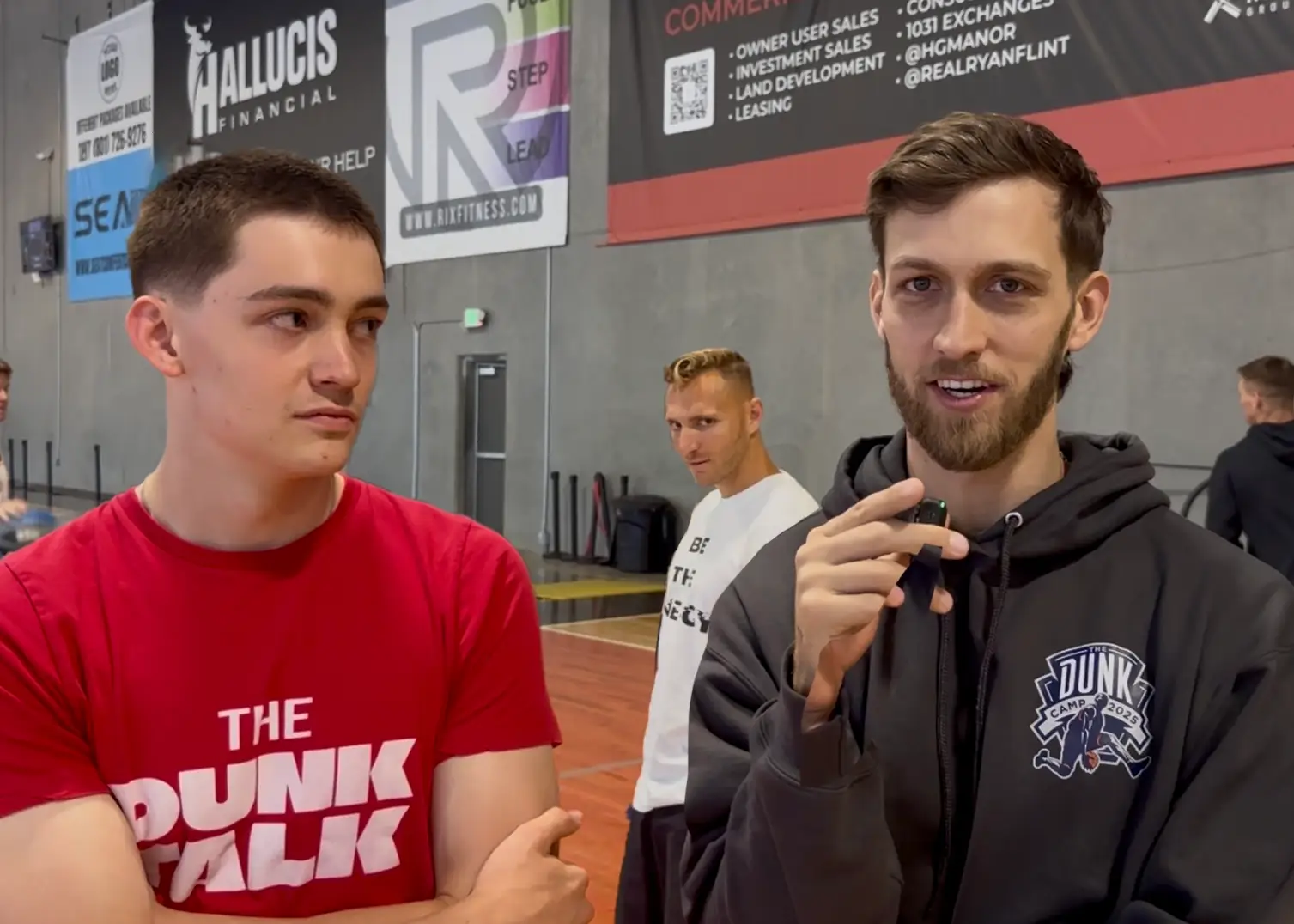
This is episode 46 of the Dunk Talk Podcast. I’m Dylan Haugen, with Hunter Castona and Donovan Hawkins, on the question that fills our DMs more than any other: do genetics actually matter for dunking? The short version of our two-hour answer: less than you think, more than zero, and almost everyone asking the question is using it as an excuse not to train. The long version follows, including a genuinely interesting argument from Donovan that the question itself can’t currently be answered.

Our own family files

We opened by auditing ourselves, since all three of us get called genetic freaks weekly. The results are humbler than the accusation. Me: both parents played sports, nobody in the family was a notable jumper, and I’d describe my build as solidly above average, nothing Olympian. Hunter: dad was a volleyball player who could rim-graze without training, mom played nothing, and the one gem is his grandpa, who held a high school sprinting record for thirty-some years. Donovan, the closest thing the sport has to a unanimous freak: multiple generations of basketball players on both sides, none of them remarkable, dad topping out at rim-grazers. The best dunker of 2024’s genetic inheritance is “everyone hooped a little.”

Donovan’s argument: the sample size doesn’t exist

The sharpest point of the episode came from Donovan, with the disclaimer that none of us studied kinesiology. His claim: we can’t actually know how much genetics matter for jumping, because almost nobody trains for jumping. Outside track athletes, the population of humans who jumped seriously from age 10 onward is vanishingly small. His bet: take an average kid, have him jump five days a week from age ten, and regardless of genetics he clears 40 inches as an adult. Until that experiment exists at scale, every “genetics are everything” claim is built on people who never tried.

This connects to his favorite misconception, straight from his Instagram Live the night before: someone asked what his vertical “started at.” Started at? At six years old he jumped two inches like every other child. People watch a Ja Morant or a Donovan and assume the gift arrived complete at age 11; in reality even the freaks couldn’t touch net at 12. Everyone builds it. The build is just invisible by the time you see the highlight.

The 50-inch stress test

The best segment was adversarial: we tried to name a single person who reached the truly elite tier, the 50-inch standard, on raw genetics with no training. The candidates fell one by one:

  • Gideon (my Minnesota teammate): jumps around 46 with no lifting. Incredible, and not 50.
  • Dillan McCarthy: Donovan prosecuted this one mercilessly. The 20-rep squats count as training. The seated calf raises in class count as training. And the 49 came on a Vert Trainer with an unverified standing reach. Verdict: trained, and still not a verified 50.
  • Anthony Height: played football, meaning years of weight room. Trained. Not a tested 50.
  • T-Dub and the natural legends: decades of jumping volume, which is itself training, and none of them with a tested 50.

Donovan and Isaiah have discussed this directly and share the conclusion: no human gets to 50 inches on jumping alone, and probably none ever will. Every member of the verified 49-plus club (Isaiah, Kilganon, Tony, Donovan, Dak) trains seriously. So the honest synthesis: genetics set a ceiling that matters enormously at the very top and barely at all below 40, training is the thing that actually moves you, and starting young effectively raises your ceiling, because a childhood of jumping reps is a biological investment that changes what your adult body can do.

Why your ceiling shouldn’t change your behavior

The practical conclusion all three of us landed on: your genetic ceiling is irrelevant to your decisions, because the prescription is identical at every ceiling. Maybe I top out at 46; it doesn’t change a single training session, because I want whatever dunks exist at my ceiling, and dunking’s great gift is trackability: there’s always a next inch, a next dunk, a next rim height. The people who quit over genetics were looking for permission to quit. (Hunter’s corollary from the myths episode applies: don’t copy the outliers’ training, and don’t borrow their ceilings as your excuse either.)

The technique footnote: there is no one right way to jump

The episode closed on a related orthodoxy that’s been quietly retired. John Evans and THP used to teach a “correct” jump: long penultimate, strong block foot. Then guys like Travis Reynolds and Tom Barnes kept jumping 48-plus with stubby penultimates and unconventional everything, and the doctrine got updated. Per Donovan, John’s current list of actual universals is three items: build speed consistently through the approach, lower your center of mass as you come in, and take off. Everything else is style that hardened into function. The one trend that does correlate with elite jumping is speed off the floor: THP actually timed Donovan’s ground contact, and from block-foot touchdown to airborne he takes 0.25 seconds. Strength gets you some of that (even bad-form bodybuilders jump okay through pure force), but the elastic snap is built by exactly the thing this whole episode keeps arriving at: years and years of jumps.

So: do genetics matter? At the margins, at the summit, yes. For you, almost certainly less than your consistency does. Donovan is “donovanhawkins_37” on Instagram. Next episode is the big one: how Jordan Kilganon became the greatest dunker of all time. Comment with your genetic excuse so we can talk you out of it.

Scroll to Top