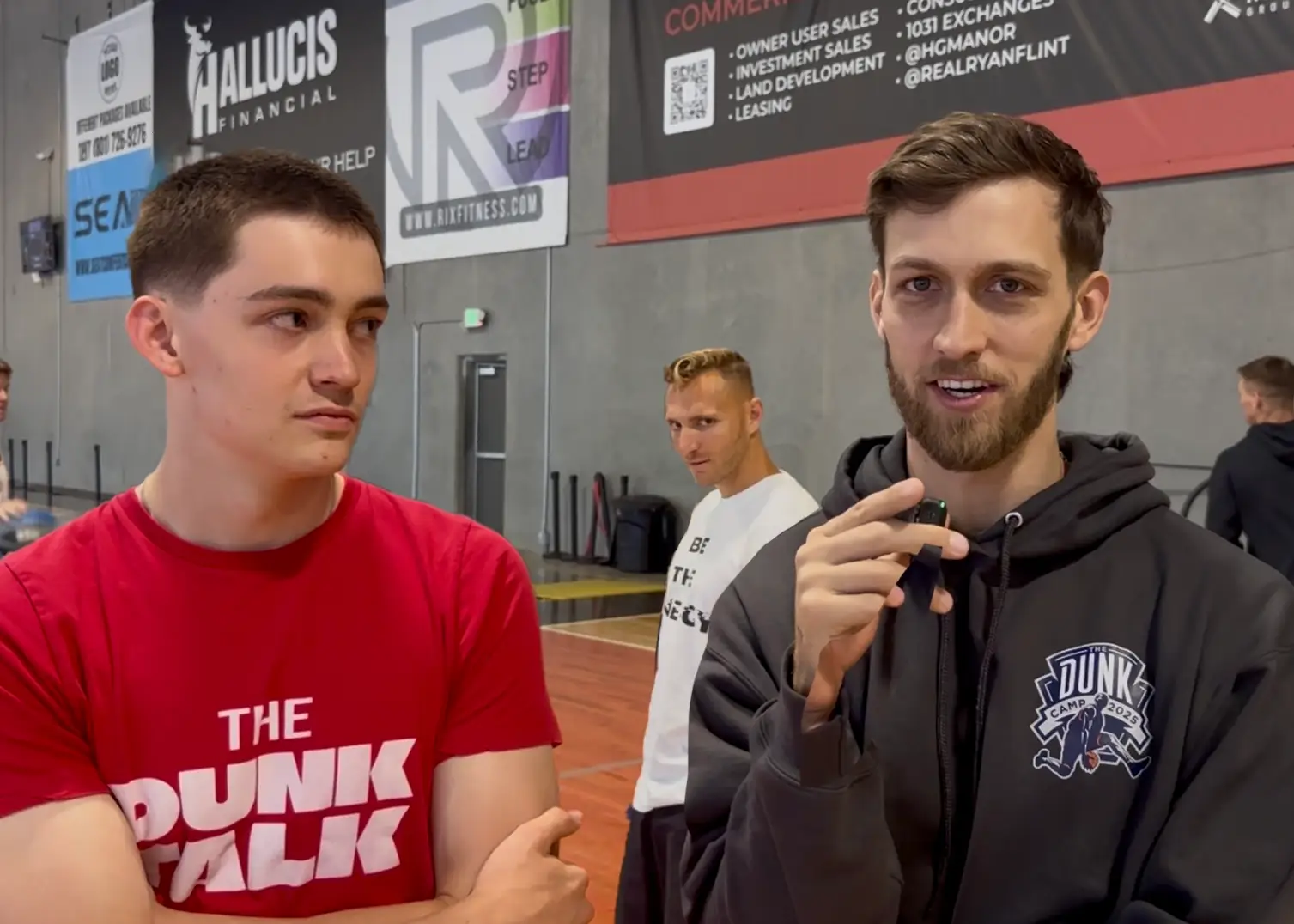
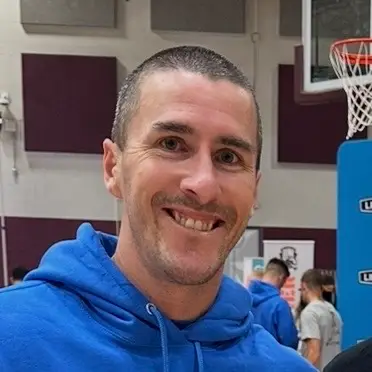
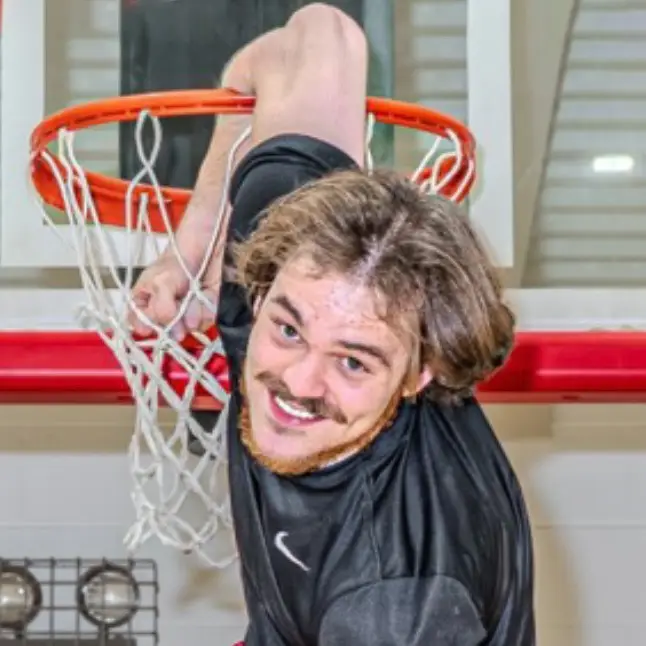
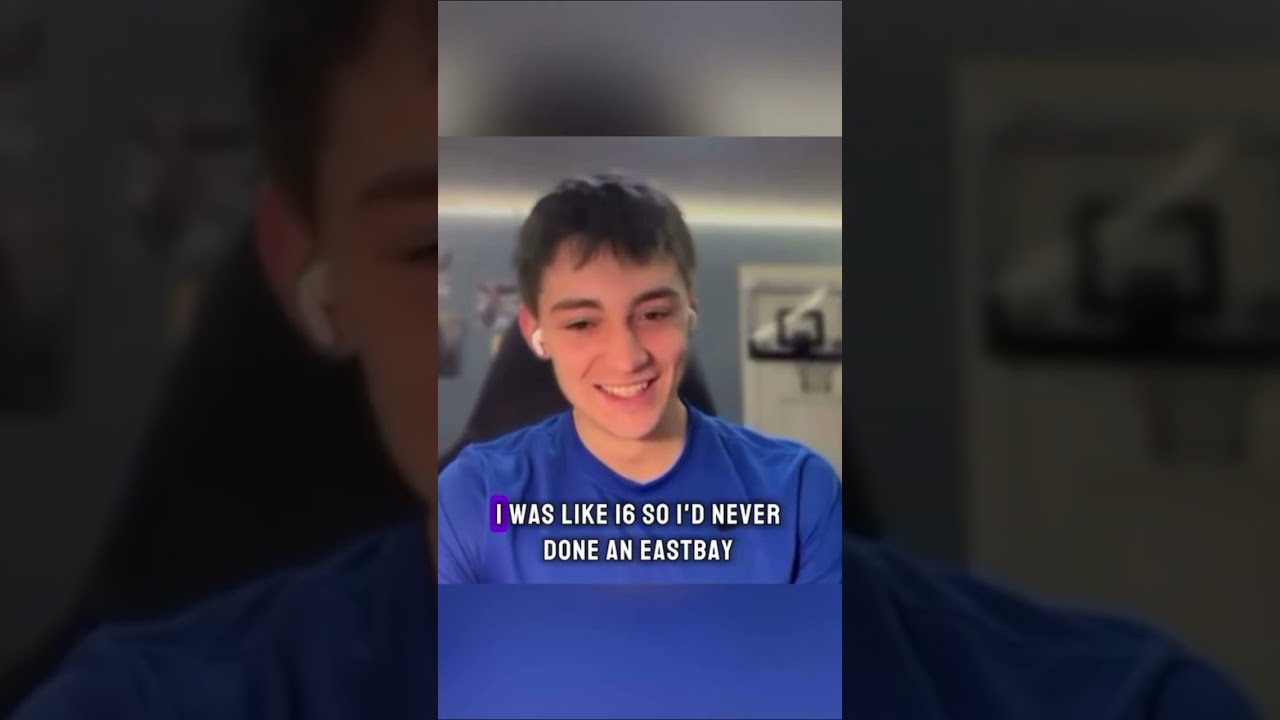
This is episode 42 of the Dunk Talk Podcast, me and Hunter Castona on a topic that doesn’t get talked about nearly enough: how much your environment changes how high you jump. I’m Dylan Haugen, and the thesis up front: dunking with people is a cheat code, certain gyms are genuinely magic, and if you cloned me ten times and sent each one to a different gym today, every clone would jump a different height. Both of us had sessions the day we recorded, and both were environment casualties, which made the topic choose itself.
Exhibit A: today’s two bad sessions
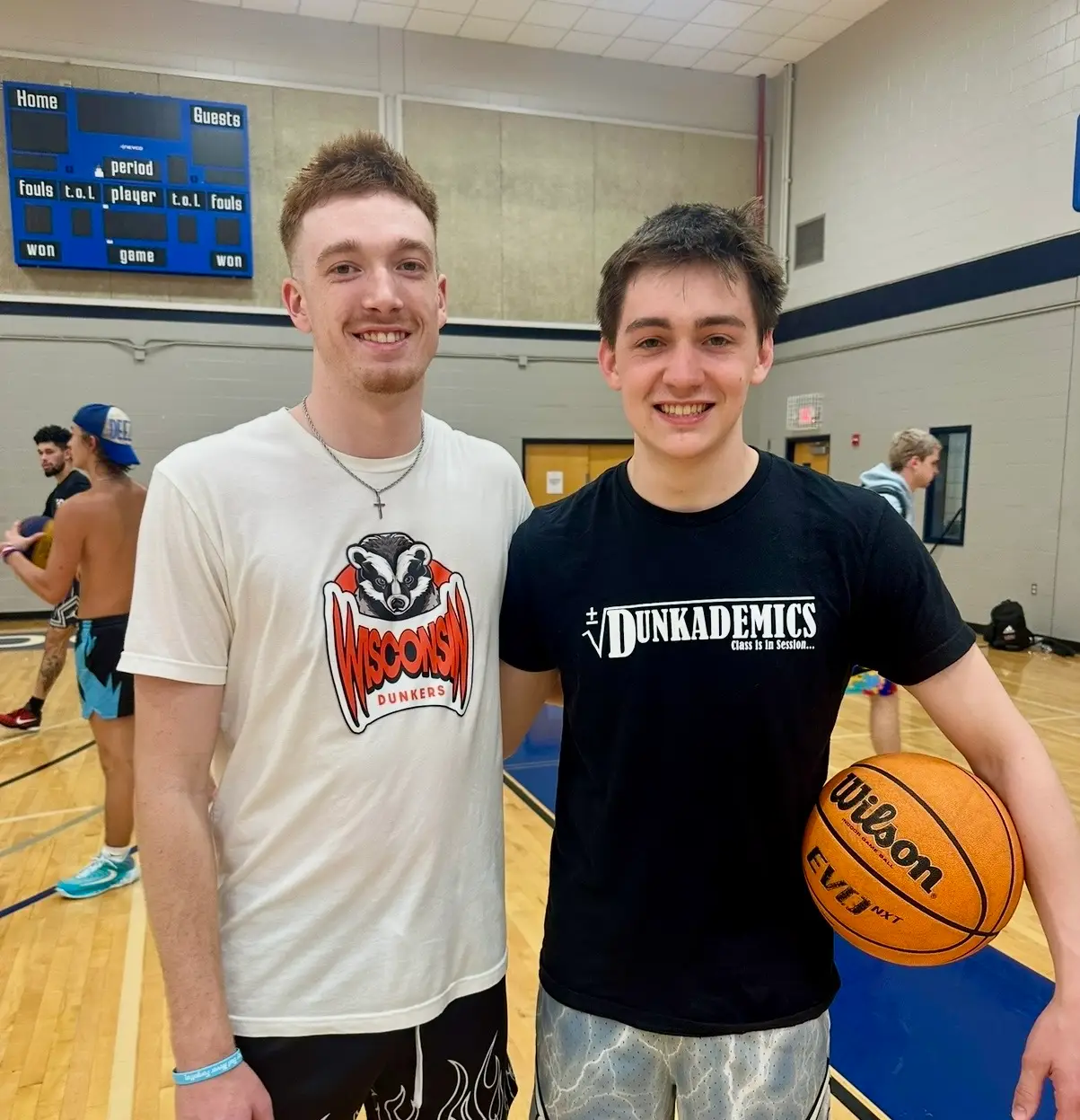
My session: a nice court near the family cabin, packed with parents and kids, dirty looks every time I set up the tripod. I jumped high and hit nothing memorable, because the whole time part of my brain was managing the room instead of dunking. Hunter’s session: dunking with CJ and Jeffrey from his Wisconsin crew, body deep in a heavy-volume cycle that’s had him jumping lower every week since Wisconsin Dunk Camp; a Windmill was his best dunk, and he and CJ have agreed to drop to low rims until their bodies can cash the checks again. Two different failure modes, same lesson: the session is never just the session.
The group-session discovery (we both made it at Dunk Camp 2023)
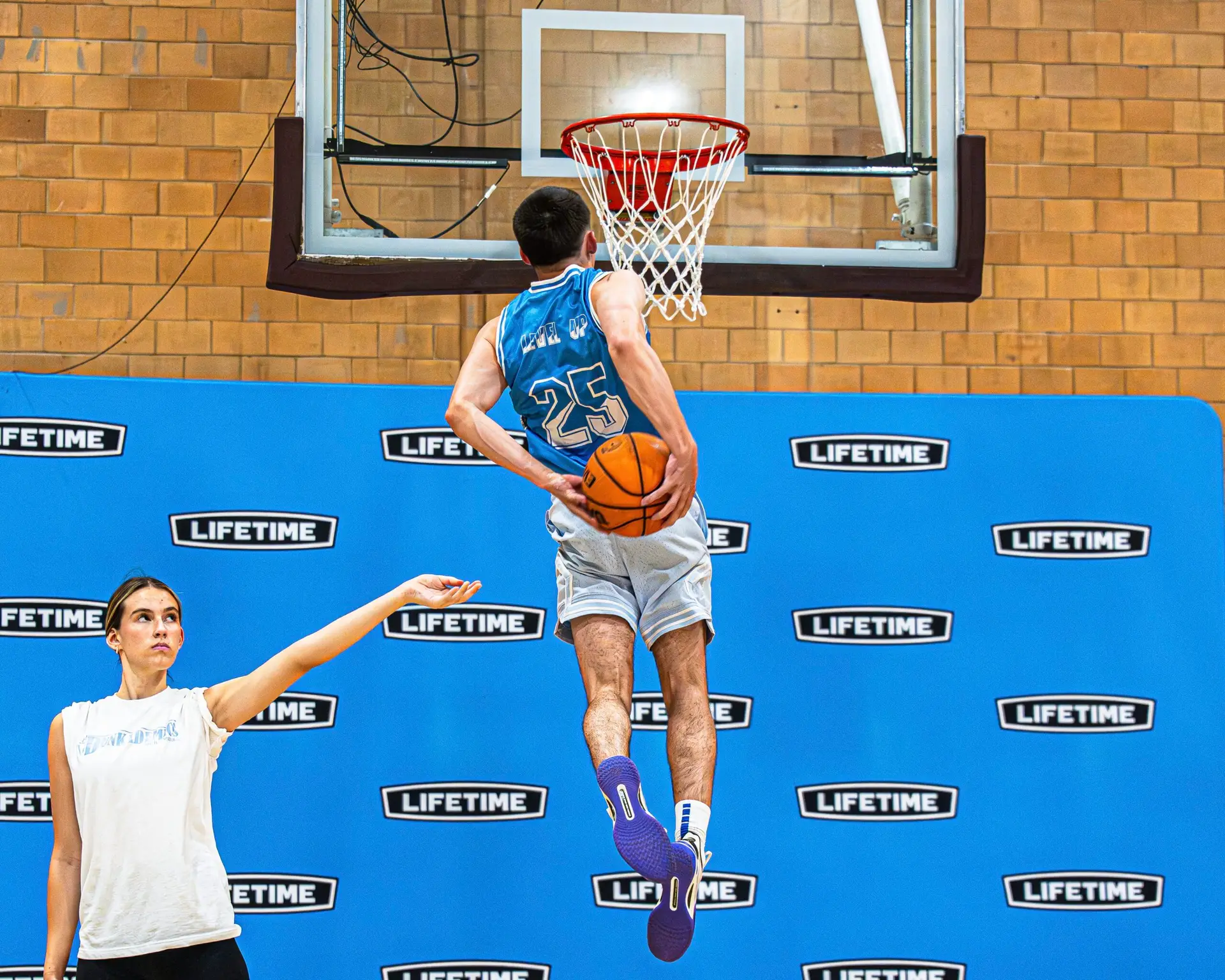
Here’s the wild stat from comparing timelines: I dunked completely alone for years. Dunk Camp 2022 was technically my first time around other dunkers, and even there I mostly watched. Dunk Camp 2023 was the real first group session of my life, on legs fried by inconsistent training and AAU, and it was still one of my best dunk days ever: three or four Windmills, jumping out of the gym. Hunter’s 2023 camp was the same revelation at higher amplitude: jumping four sessions across three days with no drop-off, five new dunks including four Eastbays (one off one foot, a first), a one-hand Windmill off the backboard, and a Reverse Pump. Before camp, the best dunk he’d ever seen in person was a Windmill.
We both went home and immediately founded dunk groups, Minnesota Dunk Squad for me, the Wisconsin crew (CJ, JJ, Jeffrey, Nolan) for Hunter, and the rest of our progressions trace through group sessions: my first Eastbay landed five minutes after Hunter’s first Underboth on October 21, 2023, the highest-adrenaline moment of my life. Hunter’s tour since reads like a map of the scene: the UCF practice facility with John Evans, Isaiah, Austin, Dom, Nathan, and RJ (his best official-10’ Eastbay ever); the 12-person Missouri session with Josh and Donovan; his hometown Wisconsin camp, where family and friends in the stands flipped a switch and produced arguably his best jumping day ever.
(Status report on MDS, with love: 23 people in the group chat, and the most consistent attendee is 53-year-old Jason. If you’re in that chat and listening: Saturday. Be there.)
Why it works: the adrenaline mechanics
The pattern across every story we told:
- Dunking with better dunkers pulls dunks out of you. Watching someone hit a dunk you can’t do is the single best session stimulant that exists. Hunter tried his first Underboth ever at my gym because the environment said try it, back-rimmed it, then hit it.
- Spectators count even when they’re not dunkers. Some of Hunter’s best solo sessions had a baseball team training nearby, audibly losing it after his makes through his noise-cancelling headphones. A crowd is a crowd.
- Nerves and excitement are the same chemical. A speaker at camp told Hunter this and it reframed everything: after day one, the feeling that used to read as nervousness reads as fuel.
- The wrong crowd does the opposite. My dirty-looks session today is the control condition. People present but unsupportive is worse than an empty gym.
It even extends sideways: at the Wisconsin session with Josh, members of the Milwaukee Bucks’ Rim Rockers trampoline team showed up, and Hunter now has a standing invite to their practice and possibly a Sky Zone trip, which I am demanding to attend.
The legendary gyms list
The other half of environment is the building itself: temperature, floor, rim stiffness (forget height, stiffness changes everything), and the invisible thing we could only call iconic-ness. The Karl Malone Center, longtime home of Dunk Camp, is the canonical example: compact but somehow spacious, and saturated with history (Isaiah’s 50.5, his 360 behind-the-back between-the-legs, Dak’s 50, the first band dunks, Connor Barth getting his pro name). We then built the official Dunk Talk bucket list of courts we want to dunk on before we’re done:
- The 9’9” LA Fitness in California, the most legendary low rim in the sport.
- Goldenrod LA Fitness in Florida, where Kilganon has hit hundreds of new dunks.
- The National Sports Center (already legendary to us; the rim feel is unmatched).
- The North Carolina blue gym (Travis, Dan, Obi, Ben, Sam, plus visits from Isaiah, Jordan, and Connor).
- The Sarasota Ballislife court from the ATG era.
- Josh’s Missouri gym (same rim as the Sports Center, somehow).
- The LA rooftop court, the Chicago skyscraper court, and every hoop on Venice Beach. All of them. I don’t care.
The point under the list: put either of us on any of those courts, any week of any training cycle, surrounded by supportive people, and we jump well. The environment can rescue a mid-cycle body, and a bad environment can waste a peaked one.
The takeaway (and what’s next)
If you dunk alone: find someone. Any skill level helps, better-than-you helps most, and a dunk group is the renewable version of camp adrenaline. If your sessions are inconsistent and you’ve only audited your training, audit your environment too: the gym temperature, the rim, the crowd, the head space. It’s the cheapest variable to fix.
And my next environment experiment is a big one: the Vegas mega-session is in six days, fourteen elite dunkers, four hours of gym, fully unloaded. If the thesis of this episode is right, it should be one of the best sessions of my life. Episode 41 has the full roster. After that, Dunk Camp Utah. Next episode is Finn Addy, one of the most improved dunkers of 2024. Comment with the most legendary gym you’ve ever dunked in.