How Daniel Castellani Became One of the Best Dunkers in Australia: Melbourne Lockdowns, an Underboth Dream, and the Elevate League Win

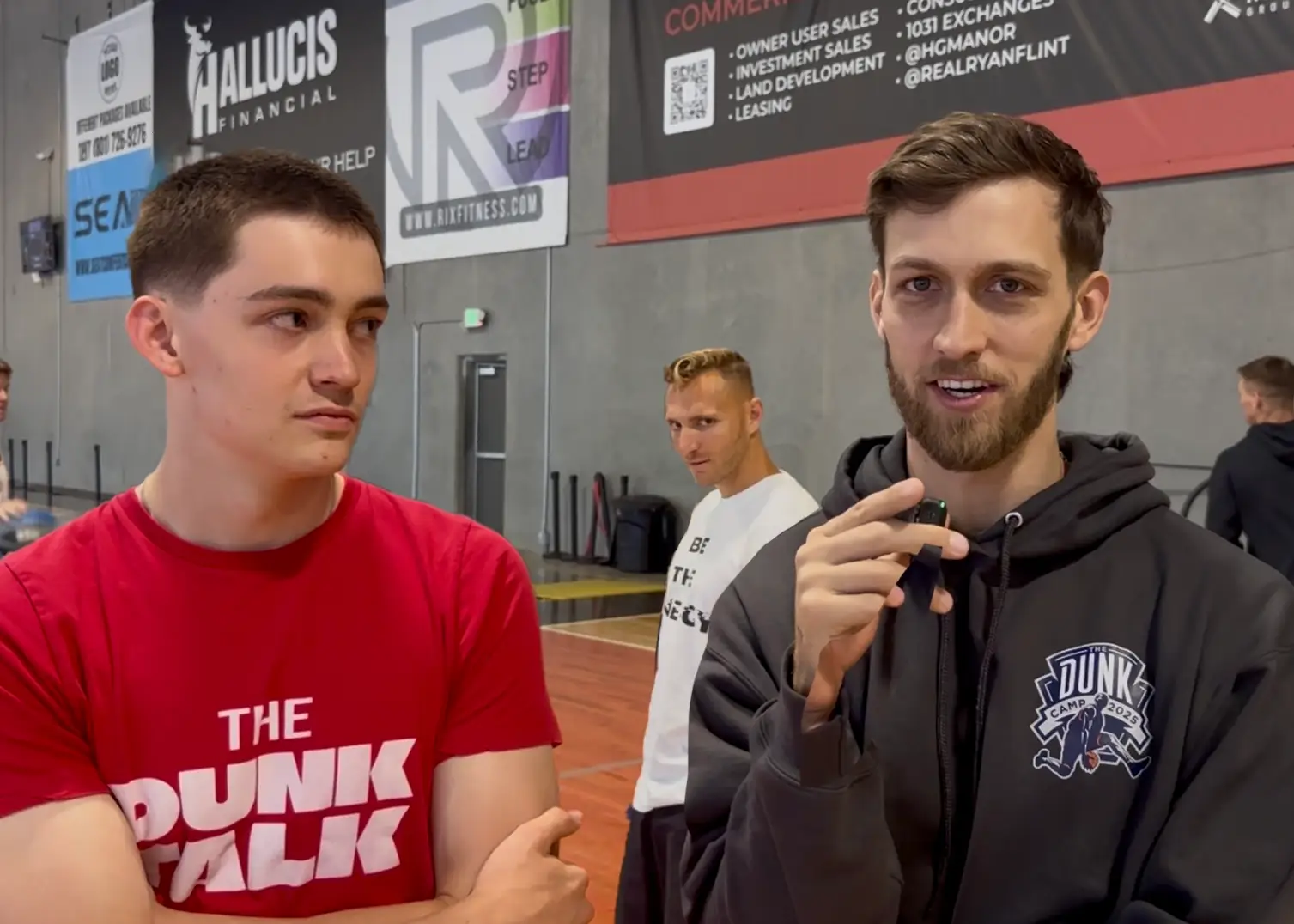
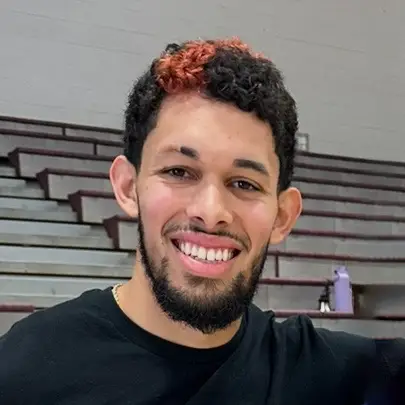
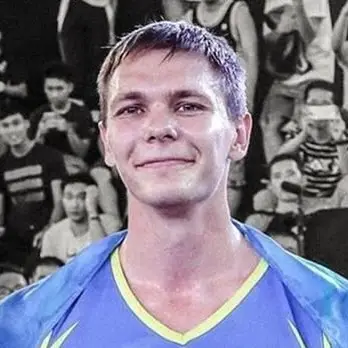
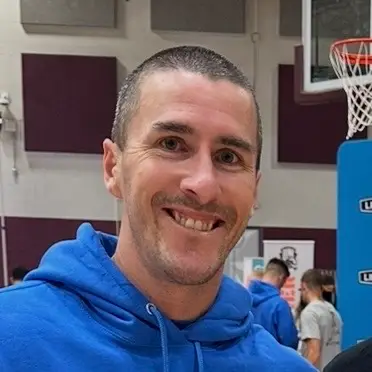
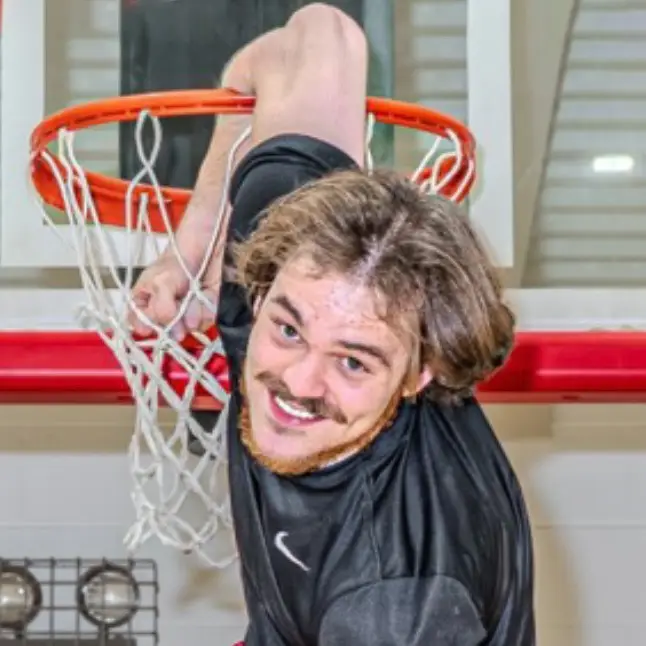
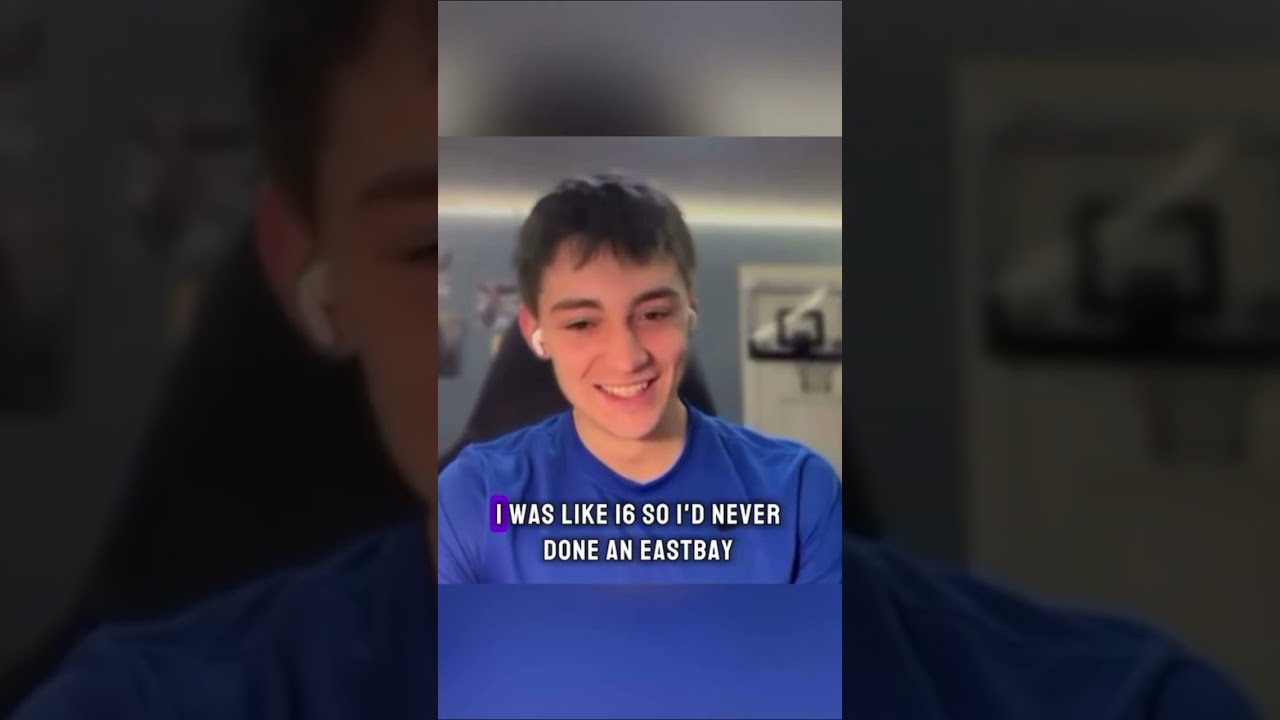
This is episode 40 of the Dunk Talk Podcast and our first proper international guest episode. I’m Dylan Haugen, joined by Hunter Castona, and the guest is Daniel “Dan Dunks” Castellani, a 6’3” dunker from Melbourne and one of the best in Australia. Dan’s story runs through one of the world’s harshest COVID lockdowns, a dunk group that changed his trajectory, and the single best contest moment we’ve ever had described on this show: pulling out an Underboth he’d hit exactly once in his life, on his third attempt, with the contest on the line, after literally dreaming that exact scenario the night before.

A doctor’s prediction and a first dunk at 14

Dan played basketball from age six, with track-and-field parents supplying the genetics. At seven, a doctor told his mom he’d grow to about 6’4”, and little Dan’s immediate reaction, “Yes mom, I’m going to be able to dunk,” set the whole agenda. He discovered the pros in eighth grade, watching Jonathan Clark and Jordan Kilganon do things he couldn’t even dream of, the same year he touched rim for the first time and realized the timeline might be shorter than “wait until I’m 18.”

What followed was the classic untrained grind: hundreds of bodyweight squats, random workouts with no technique knowledge, motor patterns borrowed from basketball, and a first dunk at 14, around six feet tall. A basketball trainer then handed him a set of ACL-rehab exercises (balance, tendon stiffness, coordination, landing mechanics), which Dan credits with several inches, with the honest caveat that at a training age of zero, almost anything works. Ninth grade brought the first one-foot one-hander (he was originally a one-foot kid in primary school before two-foot took over), and by the end of that year the first Windmill, 360, and Back Scratcher were down. All of it strictly in service of basketball; pro dunking still wasn’t on the map.

Lockdown Melbourne: three-hour home workouts and park runs till sunset

Melbourne’s COVID lockdown was among the longest on earth, effectively two years of house arrest hitting Dan in 11th grade, right as his knee pain (which started in year 10) peaked at a six or seven out of ten just walking downstairs. His response defines him: ATG-inspired home workouts with basic weights running up to three hours, then straight from online school to the park for pickup until sunset, every day. He says those park runs built friendships that carried him through genuinely hard times, which is its own kind of training effect.

The lockdown era also produced his Eastbay, and the sequence is a perfect accidental periodization story. He’d chased the between-the-legs off the dribble for over a year, never closer than rim-grabs. One day at the park he tried lobbing it to himself instead, freeing the full arm swing, and immediately started back-rimming it. Weeks later gyms reopened, basketball tryouts arrived, and the sudden unload from three-a-week three-hour workouts gave him a wave of bounce: mid-tryout, between drills, he punched his first Eastbay and lost his mind in front of a gym full of confused teammates. A year-plus of work, paid out in one rep, on accident, because he finally deloaded. There’s a training lesson in there we keep re-learning on this show.

The Melbourne dunk group (and the door he walked through)

The pivot from basketball-first to dunker happened in Dan’s first year of university, when AP Bouncy (Archie) welcomed him into the Melbourne dunk crew alongside Liam Broad, Jack, and Steve. Dan walked in convinced he was the worst guy there, and the group dynamic, no pressure, full belief, made him fearless. His articulation of the unlock is one I want every new dunker to hear: learning trick dunks requires being willing to fail and be uncomfortable. Jumping over a person terrified him; the boys’ encouragement is where the growth started. It’s the same story we heard from Mason Baker about the Utah Dunkers and live every week at Minnesota Dunk Squad: groups compress years off the curve.

Dan frames the transition in terms of faith, and it’s worth quoting properly: he felt God opened a door through the Melbourne boys, and it would have been a shame not to walk through and see what was in store. As basketball seriousness slipped away (he still plays on a men’s team for fun), the bag exploded: first Dubble Up in October 2022, first behind-the-back in November 2022, an inexplicable natural gift for dunks off the side of the backboard, and Kilganon’s Cannonball landed at least once. He also joined THP mid-first-year, primarily because tendon pain, not bounce, was his ceiling, and didn’t miss a single workout for six months. The result was less about jumping higher than about holding peak-level consistency session after session.

The Elevate League Underboth: a dream, third attempt, contest on the line

Dan’s contest record escalated fast: a rough debut at Shooters Shoot in December 2022, third at Summer Jam (Melbourne’s biggest contest), then his first win in Sydney, in the rain, on a court so slick the entire field was reduced to drop-step basics after organizers offered the choice of dunking immediately or going home unpaid.

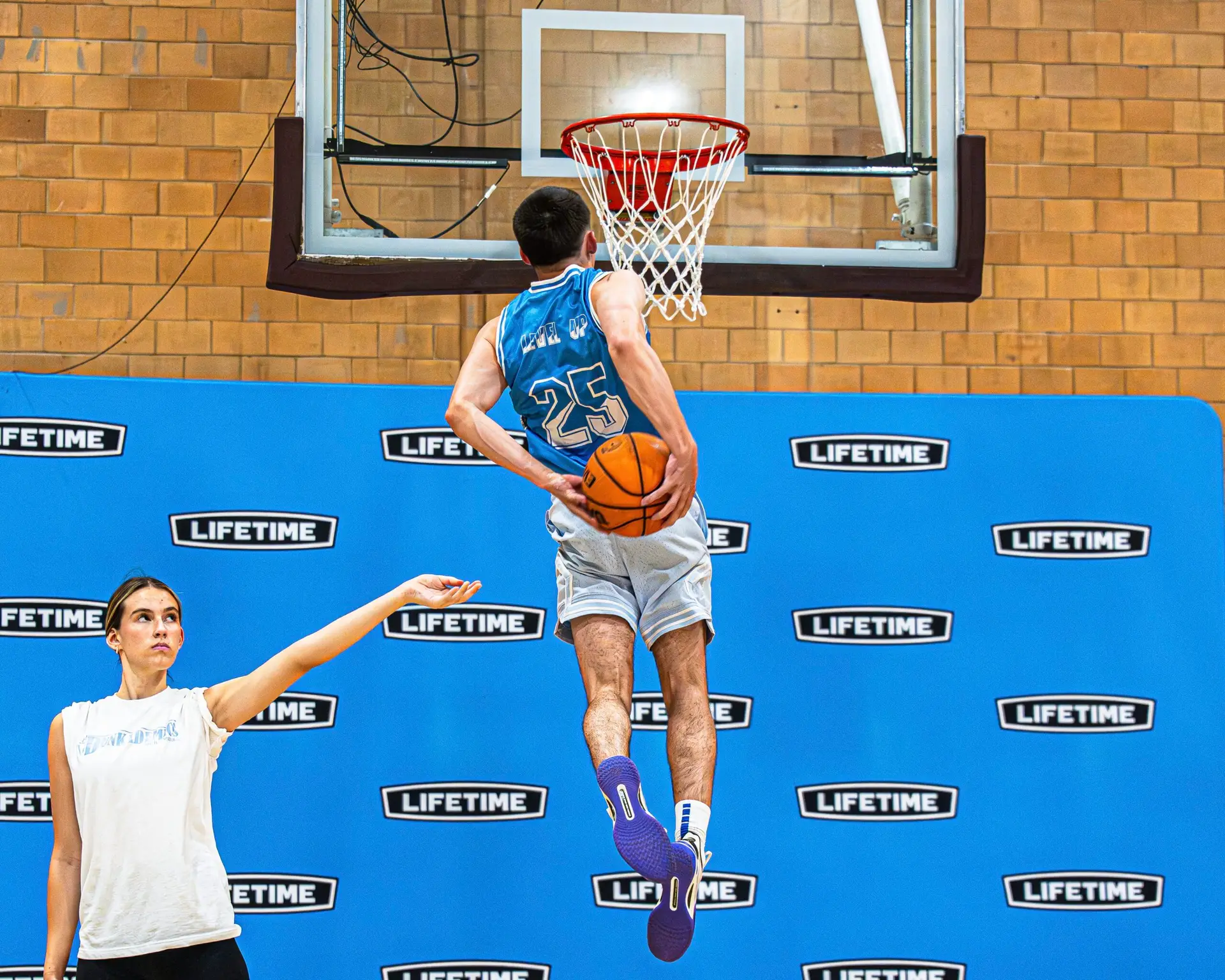
Then Elevate League. A month after hitting his first Underboth, ever, once, Dan found himself in a final round against teammates having career nights: Jack punched a first-attempt Eastbay, Liam hit the Windmill (a first in Australia, by his account) on his second attempt. Dan needed something he didn’t reliably have. And here’s the part that gives me chills: before the contest, he had dreamed precisely this, back against the wall, pulling out the Underboth. Third attempt, all the pressure, the ball stuck to his hand, he punched it, and got swallowed by a flood of people. He calls it his favorite memory in dunking and the most unparalleled energy he’s felt. The win sent him to the international contest, where he dunked alongside Chris Staples, Tyler Currie, and Guy Dupuy. He won his most recent contest earlier this year too, jumping over three people in the final against Jack, who he describes as the highest-energy human he’s ever met.

Today the Underboth is, in his words, as easy as the Eastbay was a year ago. That sentence measures the whole arc.

The numbers and the goals

Current weight room state after breaking a long plateau: power clean 253 (stuck under 220 for ages before the breakthrough), back squat 308. The goals list he laid out:

  • Weight room: 405+ back squat, 455 deadlift, and a power clean at 1.5x bodyweight, 260-plus, openly chasing Isaiah Rivera’s numbers.
  • Contests: the international Summer Jam bracket, and the FIBA circuit, where he believes, credibly, that he could already hang, if not yet with the very top dogs.
  • Dunks: the WDA Black Band, a 360 Underboth, and the long-term “impossible standard”: the 360 double between-the-legs, with Jonathan Clark’s do-the-impossible ethos as the explicit motivation. Short term, it’s combination variations: scorpion finishes and two-hand finishes stacked onto dunks he already owns.

Between Dan, the Melbourne crew, and the contest infrastructure already running there (Summer Jam, Elevate League), Australia is quietly building one of the best dunk scenes outside North America. If the Olympic-eligibility project ever needs its 75 countries, Melbourne is already carrying its share.

Dan is “dandunks” on Instagram, no caps. Go watch the Elevate League Underboth and tell me dreams don’t come true. Next episode is our best-dunker-of-2024 breakdown, and the answer is Donovan Hawkins. Comment with any international dunker you want us to interview next.

Scroll to Top