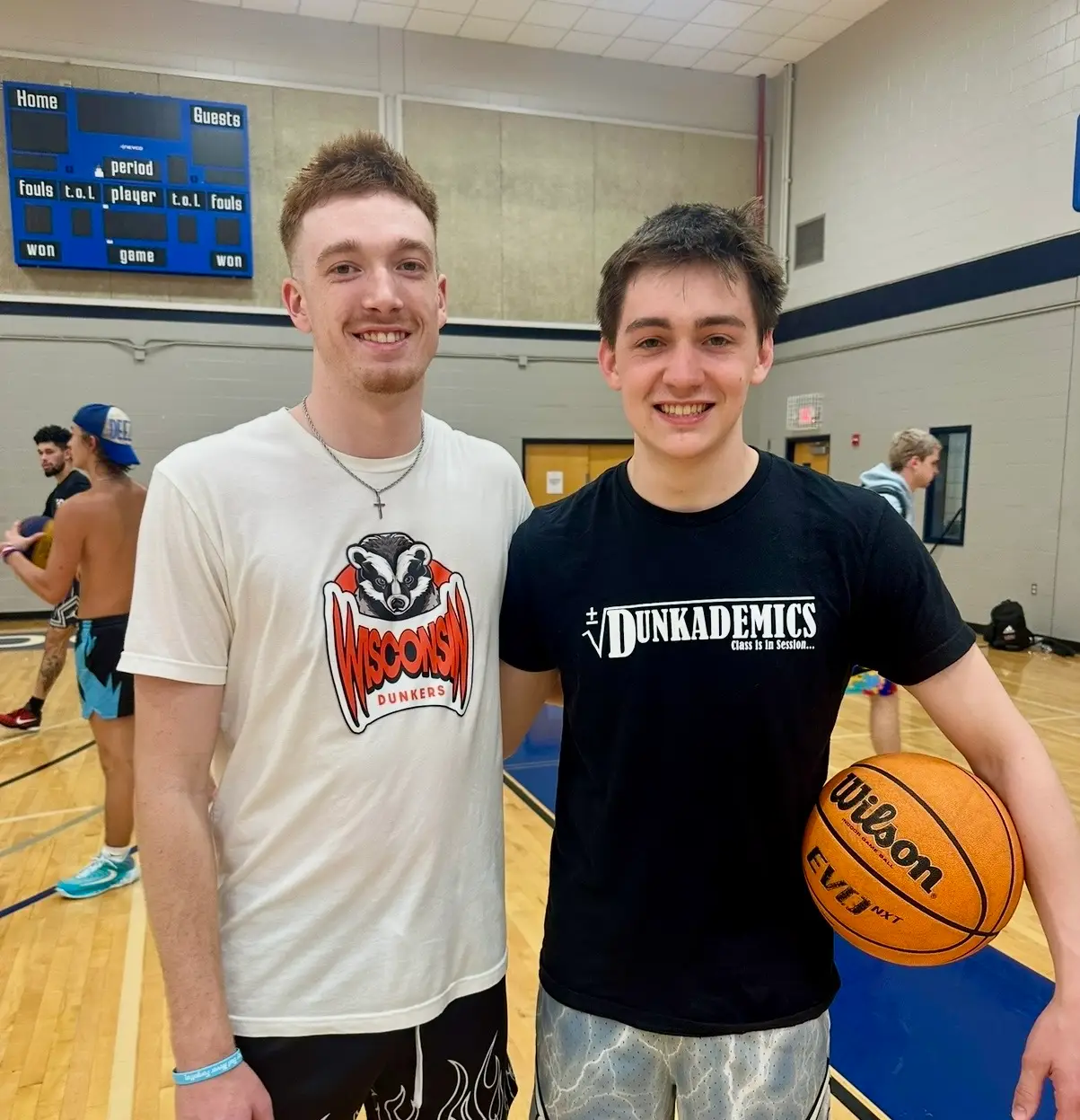
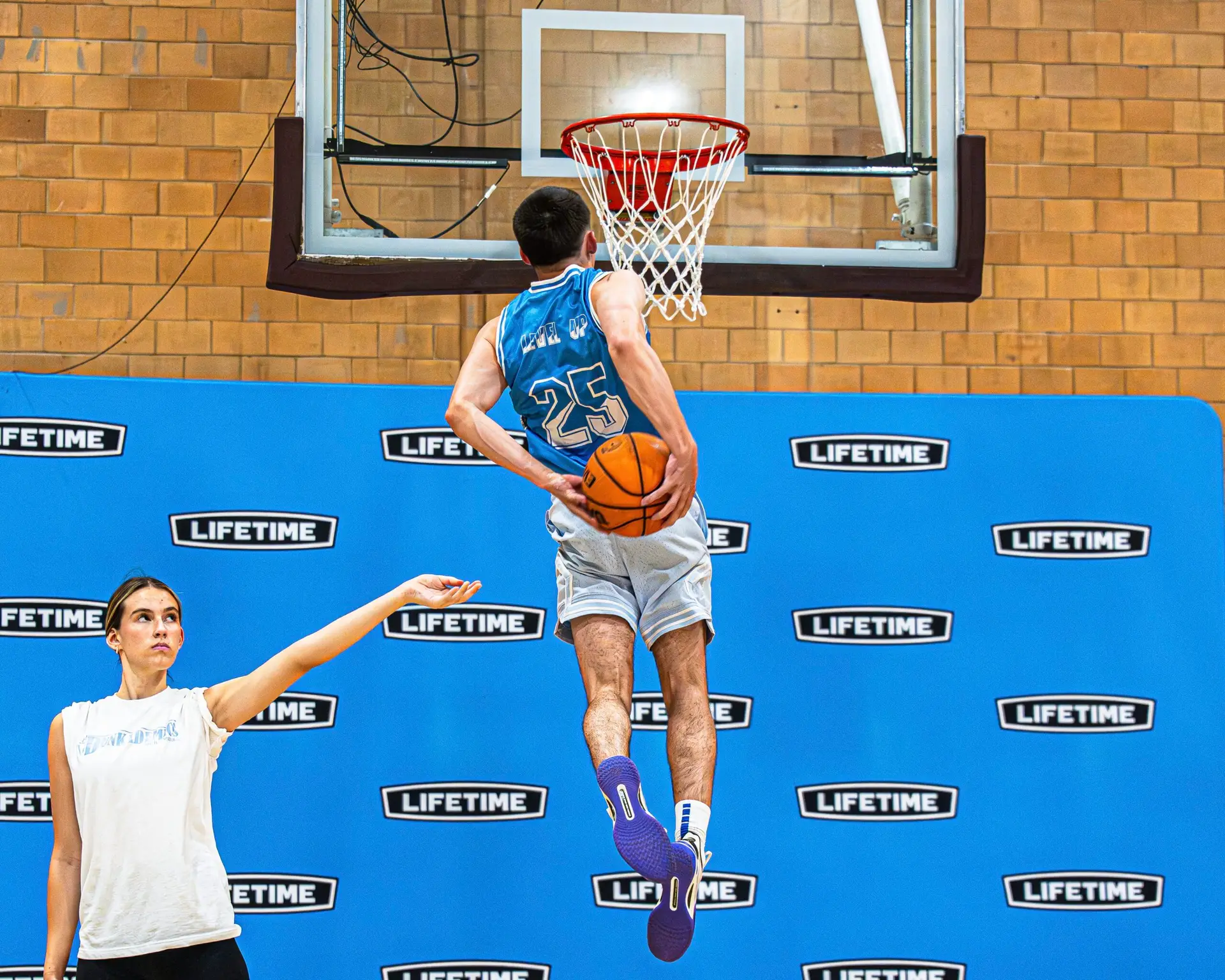
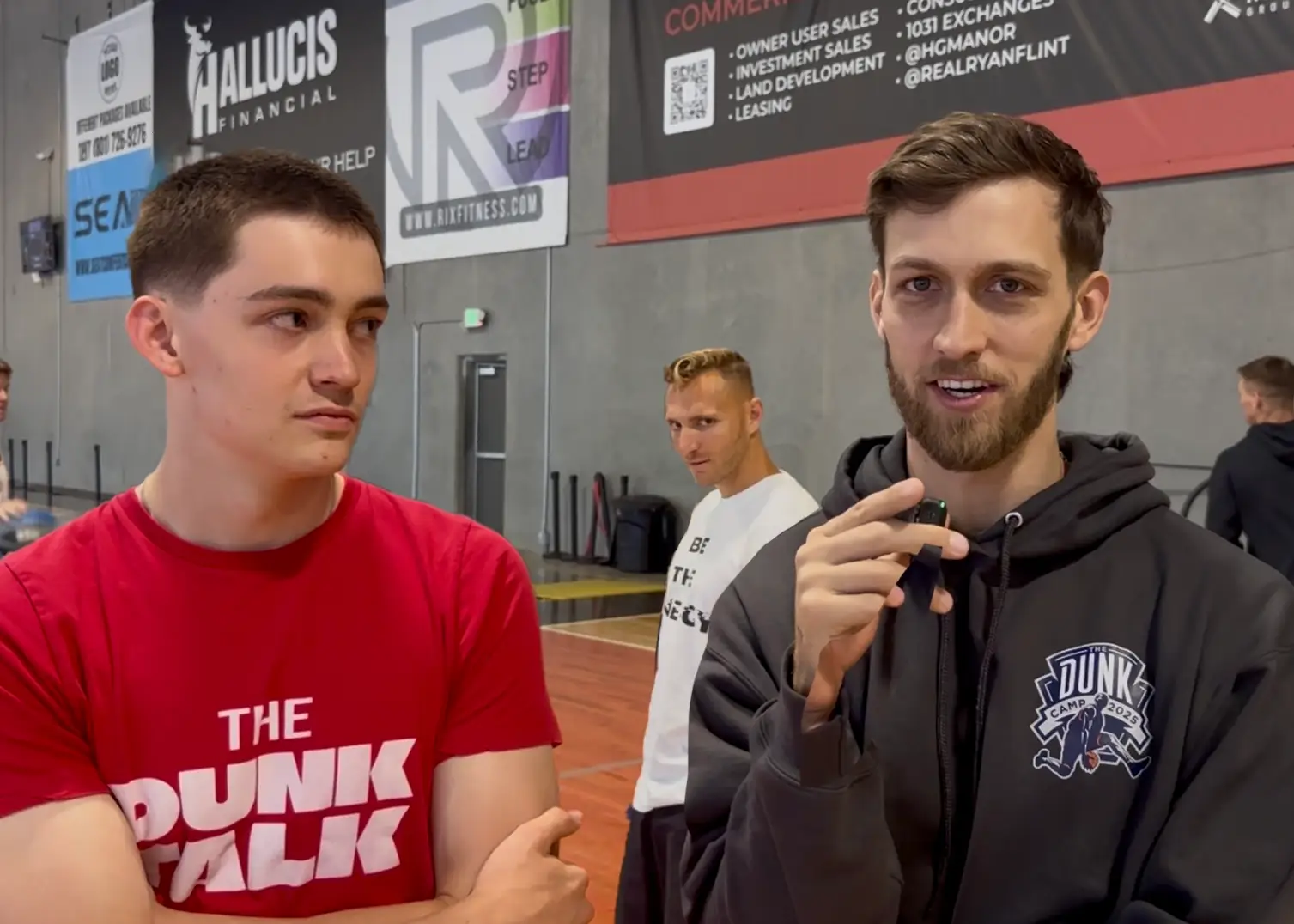
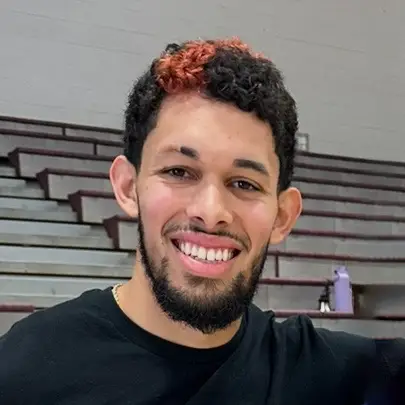
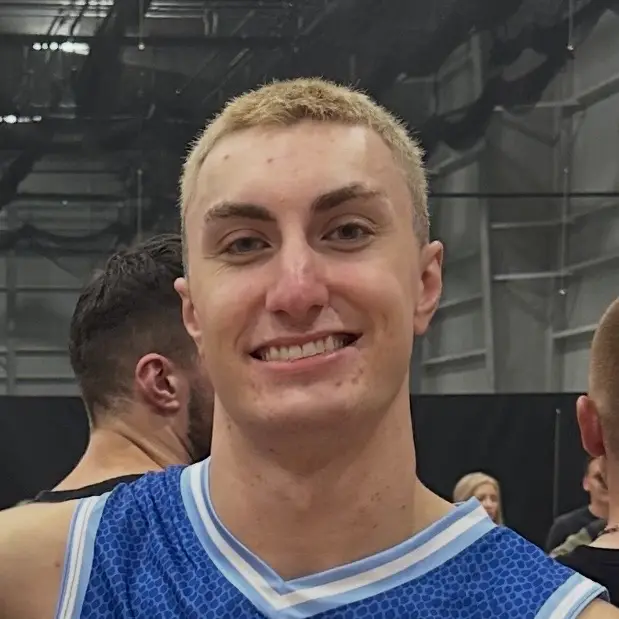
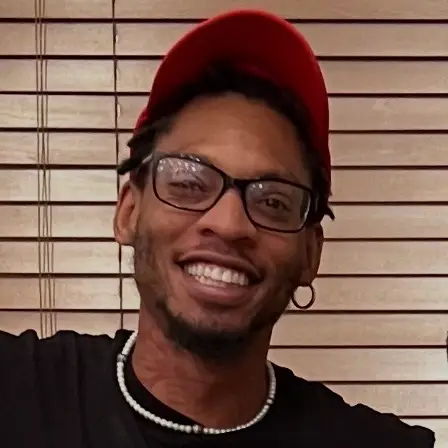
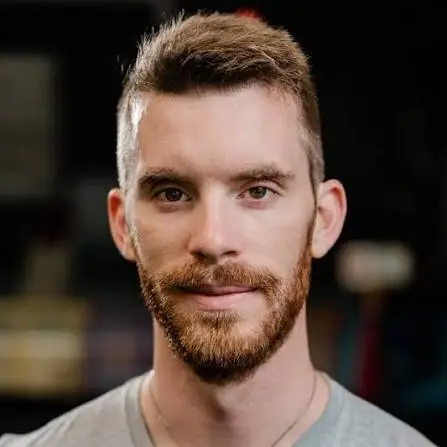
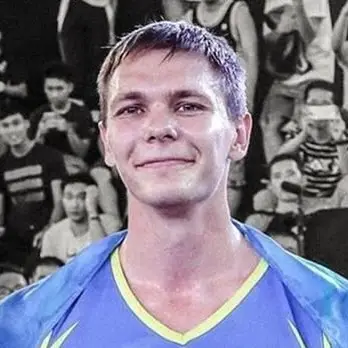
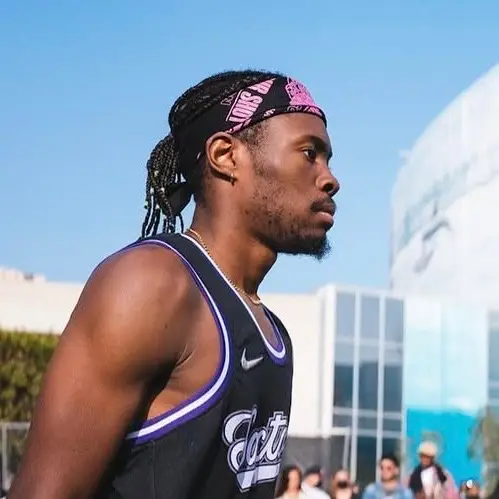
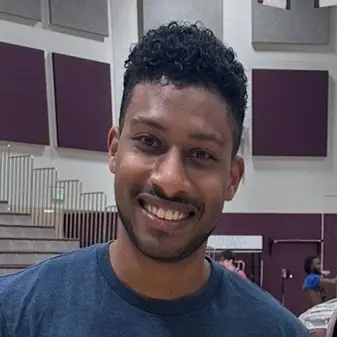
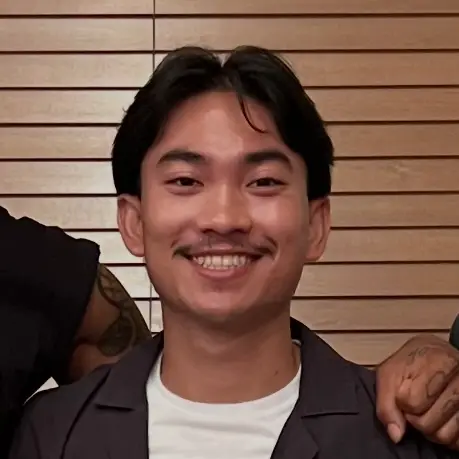
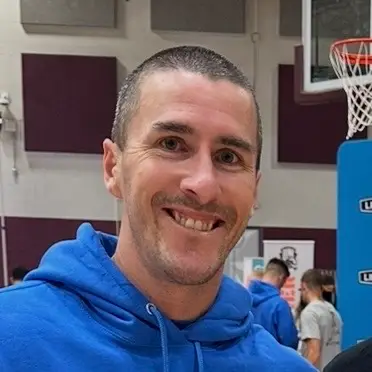
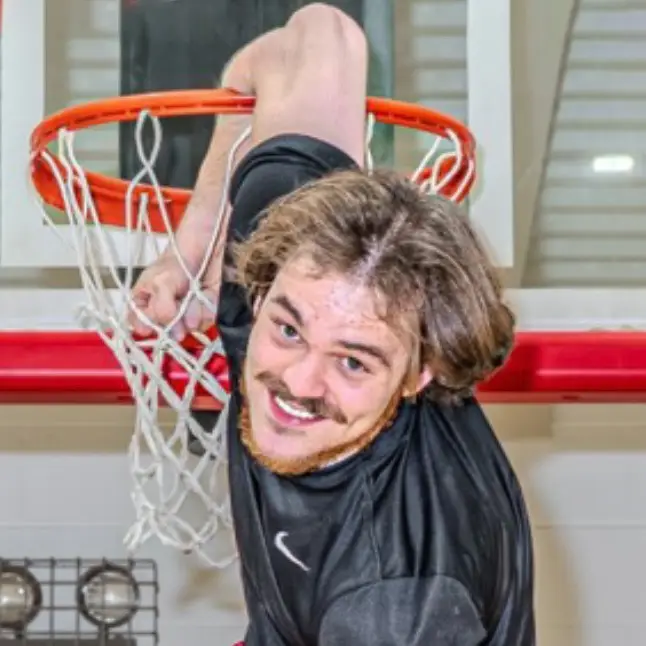
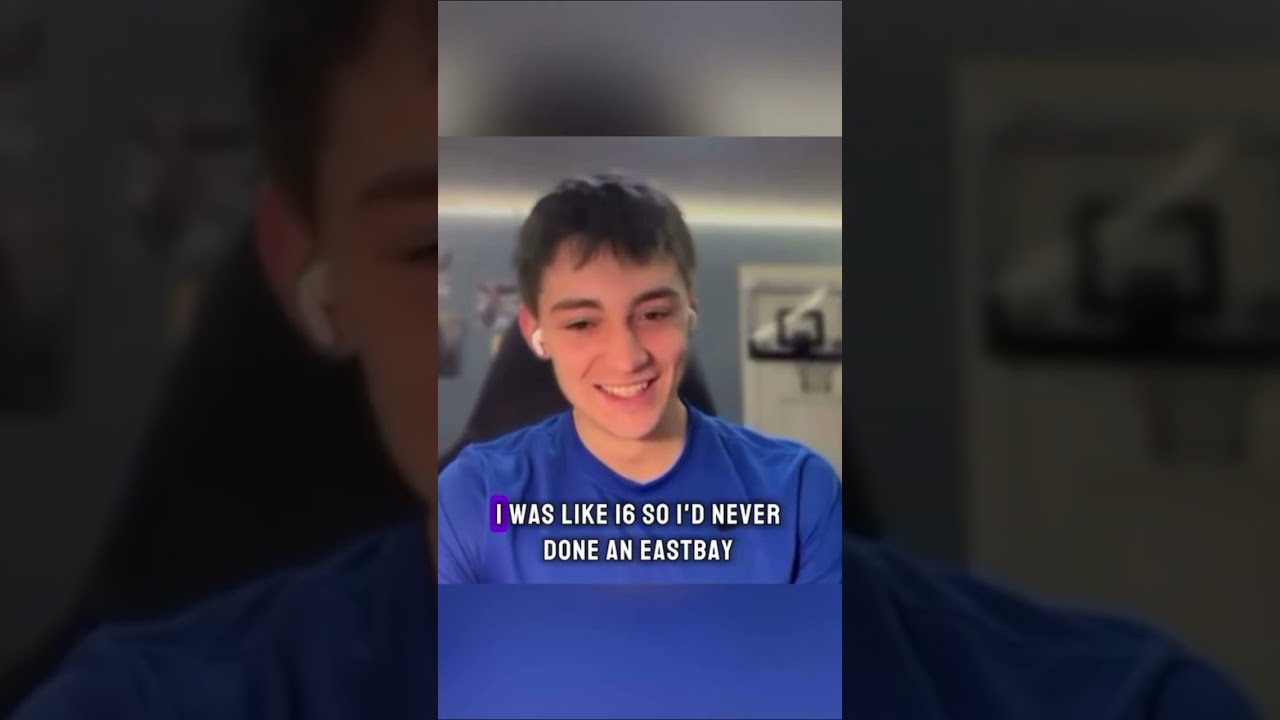
This is episode 13 of the Dunk Talk Podcast. I’m Dylan Haugen, joined by my co-host Hunter Castona, and the guest is Justin Blanchard, a 6’2” 23-year-old dunker from Minnesota who founded the Winona State Dunk Club and is one of the founding members of Minnesota Dunk Squad. This is the first episode of the show that’s really about the infrastructure of dunking. How dunk groups form, why college clubs are starting to pop up, and how the community is moving from solo dunkers grinding alone to organized weekly sessions across the US.
How Justin got into dunking
Justin’s dunk origin story is one I hadn’t heard before. He didn’t start basketball until 14 years old. He had basically no athletic background. His friends pushed him to play because he was already 6’, which is roughly his current height. He went out for it, started enjoying it, and then mid-game a coach told him “you really got up on that, you probably could have dunked that.” That single sentence is what put dunking on his radar.
He hit his first dunk at 16 turning 17, going into senior year of high school. His training in those years was the simplest thing possible: he went to a local park, put earbuds in, shot around, and jumped. Over and over. He treated it like a runner’s headphone session, a kind of meditation through jumping. There was no weight room work, no programming. Just volume.
The other detail he flagged that’s honestly rare: he can’t recall a single instance of meaningful knee pain from that whole era of jumping every day. Most dunkers who train that way wreck their knees inside two years. Justin didn’t. Even now at 23, jumping consistently, the wear and tear is minor enough that he can walk into a gym, put his shoes on, and dunk a two-hander cold. (I’ve watched him do it in November sessions where he literally hadn’t warmed up yet.)
Why Justin chose Zion and Dunkademics over the trick-dunk era
Justin’s dunking heroes came from the older Dunkademics era: Jordan Kilganon’s peak years, Jonathan Clark, Chris Staples, Young Hollywood, and the 2008–2016 compilation tape stretch. The NBA guy he modeled himself after was Zion Williamson, who is roughly Justin’s age (one month younger). Justin watched Zion’s Courtside Films and Ballislife clips when both were in high school and patterned himself after the “jump as high as I can and dunk as hard as I can” style. No tricks, no trick-dunk obsession, just maximum bounce.
That stylistic preference still shapes how he dunks today. His bag is intentionally narrower than mine or Hunter’s. First dunk was off the dribble (he watched the footage later and thought the form was atrocious). Two-hander, off-the-backboard, basic Lobs were the next layer. He skipped Windmills early because he wasn’t good at them. He skipped 360s because he got disoriented mid-spin. His current goal list is the dunks he avoided for years: a clean 360 (he’s right on the edge on 10’ right now and consistent on 9’8”), a Windmill on 10’, and eventually an Eastbay.
Justin on the law of specificity (with a PE major’s take)
Justin is a physical education major at Winona State, and his roommates are exercise science majors. He’s taken structured coursework on motor development and movement learning. That academic frame gave him a sharper version of the law of specificity than the one most dunkers operate with.
The clean version: the way your body adapts to physical activity is highly specific to that activity itself. The implication for dunking: the more you do the actual movement of the dunk you’re trying to learn, the more efficient you get at that exact dunk. Low-rim sessions matter for this reason. The point isn’t that they’re an easy version of the dunk. They’re a way to get more repetitions of the precise body movement.
One practical corollary Justin called out: don’t downsize the ball, downsize the rim. A lot of beginners switch to a tennis ball or volleyball to “get dunks.” That’s a different movement. Keep the ball size constant, lower the rim height, and you’re training the actual movement of the dunk you want to convert at 10’.
He also caught me on a related point: I’d been doing pure low-rim transfer reps without a weighted ball, and Kilganon’s advice at Dunk Camp this year was that you actually develop bad habits without resistance. The weighted ball forces your hand under the ball on every transfer, because physics won’t let you cheat with a hand on the side. (Isaiah Rivera gave Justin the same advice at Dunk Camp 2022.) I have a three-pound men’s-size ball I got from Dick’s after Kilganon pointed me at it. It works.
Justin’s Dunk Camp 2022 experience
Justin went to Dunk Camp 2022 the same year I did. We didn’t talk a single time. He doesn’t remember hearing “Minnesota” in the day-one intros where everyone shares name, social, and hometown. I don’t remember hearing his Minnesota either. Both of us were too in our own head to track it. (I was 14 and the youngest at camp; he was at his first camp and processing the room.)
The Dunk Camp 2022 moments he still talks about are the speeches. There was a presenter who used the “field corn vs. houseplant” metaphor: don’t be the houseplant that gets pampered, be the field corn that grows anywhere. Anyone who was at that camp still references it. There was another speech about how the physical symptoms of nervousness and excitement are identical (racing heart, sweaty palms, shaky hands) and the only difference is the framing you give them. Justin was first up in his 10’ contest round and turned to the rest of the field and said “guys, I’m so excited” out loud as the mental switch. The framing made the difference.
How the Winona State Dunk Club came together
The seed for the WSU Dunk Club was the Utah Dunkers, who Justin describes as the original college-affiliated dunk group. Justin saw them blowing up and figured he could do the same at his own university. After Dunk Camp 2022, where the World Dunk Association folks were actively pitching “dunking is a sport, build the infrastructure for it,” the idea solidified.
The administrative reality of starting a college club is more brutal than it sounds. WSU required a Constitution, an officially registered list of 10 members, faculty signoff, and a real club application. Justin spent most of fall 2022 dragging the paperwork through. The club went official in spring 2023. Florida State has a comparable dunk club too (founded by a guy named Jacob). As of this recording there are three known college-level dunk clubs in the US.
The mission Justin built the club around is the same one he heard at Dunk Camp: promote dunking as a sport. Bring more people into the community. Give college dunkers a structure to meet other college dunkers. The Dunk Club has its own rim setup (Justin took it off for summer because the structural integrity was suffering from heavy use, and they’ll re-install for fall). Members go through movement reps, low-rim work, and have weekly group sessions during the semester.
How Minnesota Dunk Squad started (and how Gideon got on the roster)
I started Minnesota Dunk Squad in August 2023, right after Dunk Camp 2023, for the same reason: I’d just spent a week with a community-level dunk experience and couldn’t go back to dunking alone. Hunter’s Wisconsin Dunk Squad story tracks the same arc one state over.
The Minnesota Dunk Squad founding text chain was me to Justin and Jason. Both of them were in immediately. That was the original three. Justin and I weren’t at the Utah Dunkers / SoCal LA group level yet but we had a real start. Jason then texted me one day asking if a guy named Gideon could join. I went to look at Gideon’s account and didn’t understand what I was seeing: a 5’9” guy with average-length arms jumping 46–47 inches, on dunks Hunter and I were struggling with on much taller frames. Yes. Of course Gideon could join.
The first session was at the U of M. Lineup was me, Justin, J-Rob, Jason, and Gideon. We snuck in through a side entrance. Johan joined a session or two later. The first session for me was meeting most of these guys in person for the first time and watching a 52-year-old dunker (Jason) and a 5’9” super-bouncer (Gideon) and a 6’2” PE major (Justin) and a 16-year-old (me) all in the same group session. The age and style diversity is part of why Minnesota Dunk Squad is now the most-followed dunk group on social media. (The other reason is that I post the most out of any of the group accounts. I’ll admit it.)
Hunter’s Wisconsin Dunk Squad
Hunter’s Wisconsin Dunk Squad started from the Dunk Camp 2023 9’ contest finalist field. Four finalists. Three of them (Hunter, JJ, and CJ) were from Wisconsin and didn’t know each other before camp. JJ went to a high school 10 minutes from Hunter’s. They’d played in the same fall basketball league and never connected. Jeffrey, a fourth Wisconsin dunker, was in the camp field too. John Evans walked over and asked where the contestants were from, all three said Wisconsin, and the dunk group formed on the spot.
The five-man Wisconsin squad is Hunter, JJ, CJ, Nolan Larson, and Jeffrey. Most sessions happen at Western Michigan University, where Nolan goes to school. Jeff is in Michigan for college, Nolan is busy with college basketball, and the others are local to Wisconsin. Last December the squad added a 16-year-old who had hit two Windmills the prior week and turned that into eight Windmills in one session a week later. He’s ramping fast.
The future: the National Dunk Group League
One of the things I’m most excited about is the cross-group competition we ran briefly last year between Minnesota Dunk Squad, Wisconsin Dunk Squad, the Utah Dunkers, and a couple of other groups. We did online dunk contests over Instagram (each group sends their best dunks, the rest score them). We did a costume contest where Hunter wore a Spider-Man suit that was too tight (modeled after the Professor and Kilganon Spider-Man bits).
What we couldn’t pull off, because of money and logistics, was in-person inter-group competition. That’s the next step. Most of the dunk groups are scattered across the US, most members have day jobs or school, and flying everyone to one gym for a one-day event is a real expense. Once any of us solves that, the inter-group competitive scene is going to be a real thing.
Justin’s read is that the college dunk club model is the cleanest pathway. If WSU, Florida State, and the Utah Dunkers are joined by 5 or 10 more college clubs over the next year or two, you get an actual structure: each school has its own rim, its own session schedule, its own members, and inter-school competitions become much more feasible. NCAA doesn’t recognize it, but neither did most of the sports that are now NCAA-funded when they started.
The bigger picture for dunking as a sport
The infrastructure conversation always comes back to where dunking sits as a sport overall. The WDA has been pushing for a more formalized circuit. Shaq’s DunkMan League is launching this summer, which is the highest-profile professional dunking structure that’s ever existed. Dunk Camp is now in two cities a year (Utah and Wisconsin). The college dunk clubs are forming. Five years ago, none of this existed. The next five years are going to look extremely different.
The point Justin keeps coming back to is that you don’t need to be Kilganon-level to participate. The dunk community is built on people showing up to sessions, helping each other learn dunks, and pulling each other up. A college club at WSU isn’t producing the next Isaiah Rivera. It’s producing 10 students who are dunking weekly when they otherwise wouldn’t be. That’s the win.
Where to find Justin (and the WSU Dunk Club)
Justin posts under his own name on Instagram. The WSU Dunk Club has its own Instagram page. Justin doesn’t currently have the password (which he’s actively trying to recover from the previous admin). Anyone at Winona State who’s interested in joining can reach out through the page or directly to him.
Next episode of the show is with Hyrum Fechser on how he tested 48.5 inches. After that, Jordan Pimstone on his 45-inch vertical test. We’ve also got a Wisconsin Dunk Camp recap coming once we get back from Wisconsin in August. If you have a dunker you want me and Hunter to interview, drop the name in the YouTube comments.