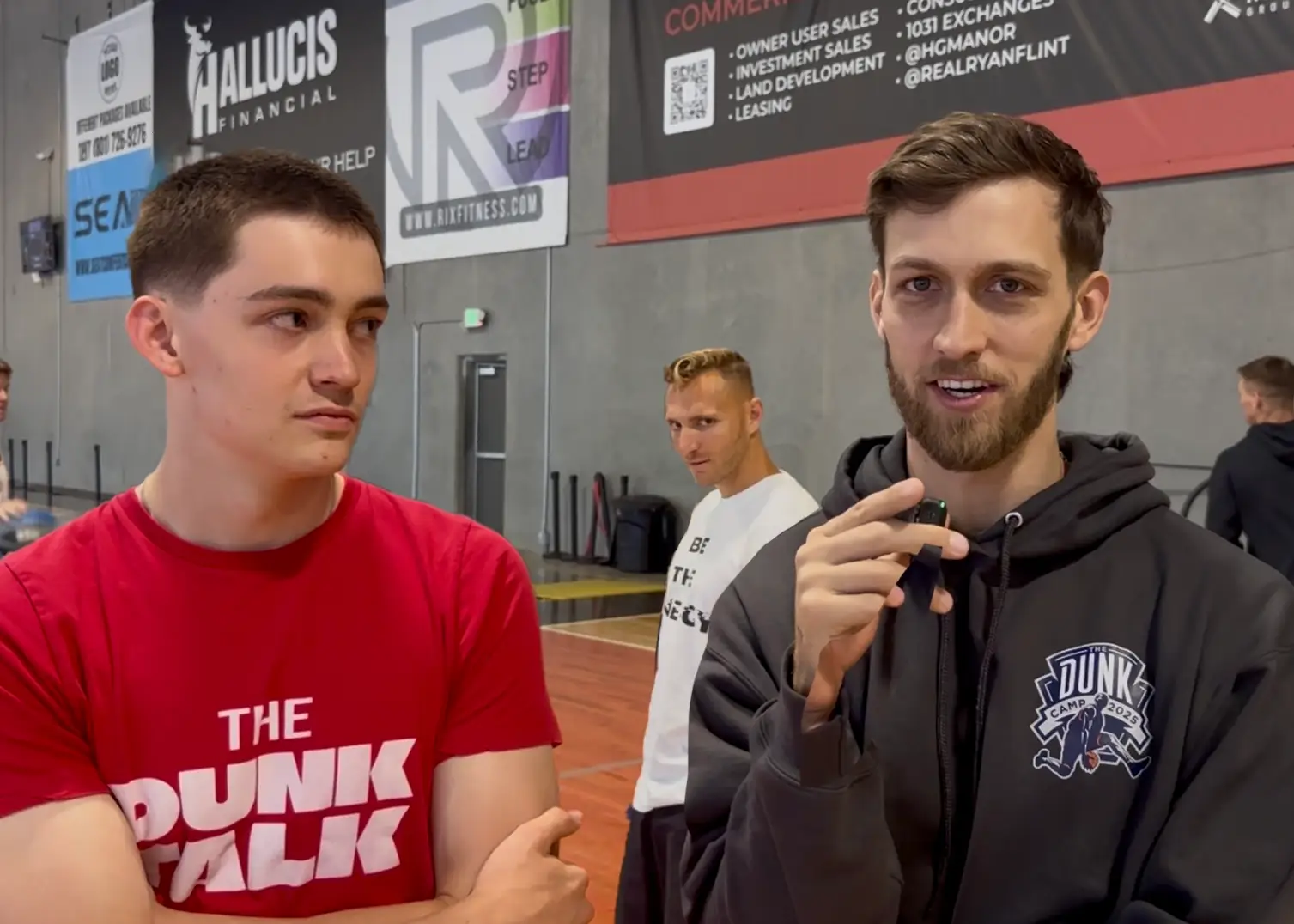
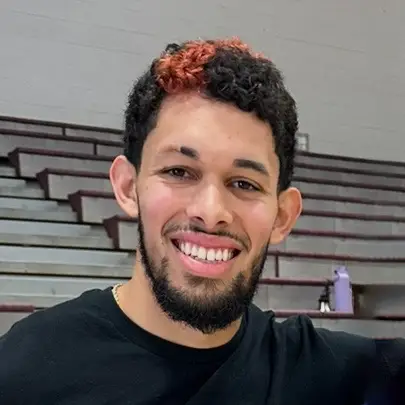
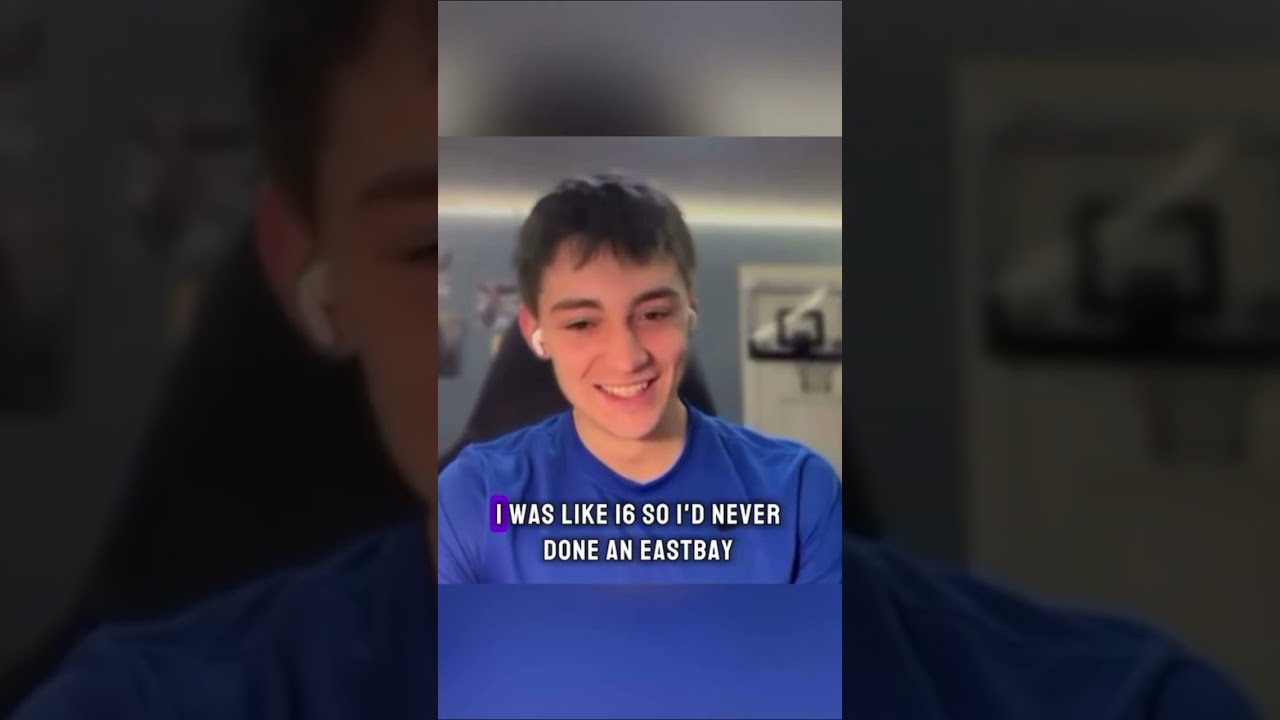
This is episode 12 of the Dunk Talk Podcast. I’m Dylan Haugen, and the guest is Miles McDonald, better known as Miles McDeezy. Miles is 16 years old and just crossed two million YouTube subscribers a few months ago doing basketball spinning videos. His resume already includes a Jimmy Fallon appearance, courtside videos with the Harlem Globetrotters, a featured slot on AirRack’s talent show, and an active partnership with the Utah Jazz. He came to Dunk Camp 2024 in Utah, won the 8’ contest, and threw the lob Jordan Southerland double-elbowed first try in front of the entire camp. This is the cleanest case study of a teenage content creator on YouTube I’ve gotten on the show.
How basketball spinning became his thing
Miles started spinning basketballs at 8 or 9 years old. He was randomly good at it from day one and could pull off the Harlem Globetrotter “up and through” trick before he was 10. He did town talent shows. Then he kept doing it, every day, all the time, into his early teens.
The volume jumped at 14. He and his family had a New York City trip planned and he wanted to do a street performance there. He gave himself three to four months of dedicated practice (August into September), two to three hours every day, inventing a new trick every week. He came out the other end with burn marks on his fingers and a routine he couldn’t miss. Street performance happened. From that point forward, spinning was the thing.
How he actually started growing YouTube
Like a lot of kids who eventually become real YouTubers, Miles’s first channel was a friend-group trick shot channel modeled on Dude Perfect. Made videos with his friends and his neighbor. School teachers got annoyed when his friends started playing them in class. The channel petered out after a year or two.
What turned it into a real career was getting a phone at 14 the summer of that NYC trip. He downloaded YouTube (his mom didn’t love that), started filming basketball-spinning videos in his room, and posted three or four a day. Bad quality. Bad lighting. He didn’t care. He kept going. Influences were Airrack, MrBeast, and the larger YouTube ecosystem he was already watching for hours.
His editing setup the entire time has been CapCut on his phone. He has the Pro version but doesn’t actually need most of its features. The professional look on his current videos came from raw trial and error: three to four hours per video, around eight hours a week on CapCut alone, looking up reference clips and testing techniques as he went. No tutorials. He still uses the same tool. The lesson he’d give any kid trying to start a channel: stop investing in fancy editing tools and start investing in your reps with whatever free tool you already have.
Opportunity #1: the Harlem Globetrotters DM
The first big break came from a Harlem Globetrotters tour stop near his town. Miles found out 57 days in advance. Every single day from then until the show, he posted a countdown video with Globetrotter content. He commented on the actual Globetrotters’ videos. The team noticed the comment, looked at his channel, and DM’d him on Instagram.
Which was a problem, because his mom didn’t know he had a YouTube channel yet and he didn’t even have Instagram. He created an Instagram that night, responded, and ended up with courtside seats at the Globetrotters game right next to the bench. He got there six hours early, made videos with the team for four hours, left school halfway through the day, and ended up with content shot on an NBA-quality hockey-arena court the team was using for the first time. That was the first “wait, this is actually a career” moment.
Opportunity #2: Jimmy Fallon
The Tonight Show with Jimmy Fallon found him via TikTok, not YouTube. The specific video that booked him was a clip of him spinning a basketball on a toothbrush. Around April or May, when he was at roughly 1.8 million subscribers, he got an email titled “Tonight Show appearance.” He almost ignored it because he didn’t know what The Tonight Show was. His dad recognized the name. Miles answered the email, the team verified through his Instagram, and he flew to NYC to do the toothbrush trick on national TV.
The broader lesson he and I went back and forth on: if you’re a content creator and you don’t have your email visible in every bio, you’re leaving real money on the table. Most of his big opportunities have come through email. Same for me. Instagram DMs occasionally land something small, but the legit corporate offers come through email almost every time. Free product, paid sponsorships, brand deals are pretty much all email. Put your email in every bio.
Opportunity #3: AirRack’s talent show
AirRack (15.1 million subs on YouTube) put out an Instagram story announcing a talent show. The story had been up for six hours when Miles saw it at 11:30pm and figured he was probably too late. He stayed up from midnight to 2am making a two-minute submission video and sent it. Forgot about it. Got accepted a few days later.
The trip to LA for the shoot was the same weekend as his school basketball tryouts. He took the trip. (His coach gave him a quasi-spot on the team based on one remaining tryout day.) On set he met 25 of the most talented young creators across various skills: the best yo-yo person in the world, top scooters, a roster of names he already knew from YouTube. The production was a clinic on how a real YouTube video gets made: 15 camera operators, a director, dedicated prop crew, multi-hour setup for each segment.
Miles’s read on AirRack as a person: way more relaxed than people expect, easy to talk to, on the same page as the creators. Contrast point: when he met Jesser at a basketball game once, Jesser came across as awkward. (Miles framed that as a not-mean observation, just a comparison. Some big YouTubers are fully on, some aren’t.)
Opportunity #4: the Utah Jazz cold-email play
The Utah Jazz partnership came from straight-up cold email. Miles found a list of staff at the Jazz and emailed 20 of them. One responded the same day (he almost rejected the call because it looked like a spam number). They’ve become friends. He’s made one Jazz video already and is heading back down to Salt Lake to film a 3-on-3 video the week after this recording.
The takeaway he gave me is one I think a lot of dunkers underrate: the people inside big organizations are way more reachable than people assume. Most front offices have publicly listed staff. Most of those people have publicly listed emails. Send 20 cold emails, get one response, that’s a partnership. Anthony Height (the 5’6” highest jumper in the world) reportedly does this. State Farm partnerships, Jordan Brand merch, Step Coach Dunk pack. Those didn’t come because he’s the best dunker. They came because he sent the email.
Miles’s dunk inspirations and the plant switch
The dunking side of Miles’s career started with the original Dunking TV show in 2016–2017, which is also how a lot of people first heard of Jordan Kilganon. He watched every episode he could find. The Dunk League episodes he ran back 15 times each, watching them every night the next summer. Dmytro Kryvenko and the rest of that era are all over his watch history.
His first plant favorite was Chris Staples, which made Miles a right-left dunker by default. Last summer he started watching more Isaiah Rivera and noticing how much higher Isaiah seems to get off the same approach. He decided to try left-right (Isaiah’s plant, and mine). For about a month he could barely dunk. Then it locked in. He’s now a left-right plant dunker and his max touch is up. The switch is hard but worth it if you have time on your side.
Miles’s dad runs a basketball gym (and that’s a real edge)
One of the more impressive things about Miles’s setup is that his dad runs a private basketball gym in their town. As Miles puts it: “piano lessons but for basketball,” in Miles’s framing. Kids ages 4 through 16 come for weekly group sessions plus private lessons. All the coaches are college athletes. Half-court and full-court spaces, adjustable rims, open every night. Miles can film and dunk session there essentially whenever he wants. He filmed a 100-balloon basketball spinning video there from 10pm to 3am the week before this recording.
For any dunker reading this who’s frustrated by paid gym time, his setup is the upper bound of what private gym access can look like. I jump at a paid red-court gym that gets busy (and another gym that costs $50/hour to rent), so I do my Saturday Minnesota Dunk Squad sessions there only when I can split it among a group.
Dunk Camp 2024: testing 10’10” and winning the 8’ contest
Miles signed up for Dunk Camp 2024 right after seeing the back-of-the-camp Karl Malone clip in a Dunkademics video. (He’d watched Dunkademics for four years before realizing the camp was three hours from him.) He and his dad practiced 8’, 9’, 9’6”, and 9’10” on Sunday sessions every week leading in.
Day one of camp he tested vertical. He took creatine pre-workout for adrenaline (Hooping Nate’s “I don’t drink caffeine” pass was on the table; Miles took the boost). His standing reach put his ceiling around 10’6”–10’7”. First try he hit 10’7”–10’8”. He kept going. Ended at 10’10”, which was significantly more than he’d ever touched.
The other moment from day one that stuck with everyone in the room: he threw a lob to Jordan Southerland with no warmup. Southerland came out from a standstill, jumped off one, and double-elbowed it on the first try. The footage doesn’t communicate how rare a double elbow first try with zero warmup is. (Miles’s reaction in real time: “there’s no way that just happened.”)
Winning the 8’ contest on Thursday
Days two and three Miles couldn’t jump (left quad). He spent Wednesday on the rooftop court practicing dunks for the Thursday 8’ contest at low intensity. Thursday morning his legs were dead for 15 minutes pre-warmup and then loosened up exactly when the contest started.
The field was loaded with low-rim specialists: Hunter Castona, Luke, Hooping Nate, Rick. Miles’s contest plan:
- Dunk 1: Vince Carter reverse 360 Windmill (his guaranteed dunk). Missed the first two attempts because adrenaline. Made it on the third.
- Dunk 2: 360 between-the-legs with a Dee Brown leg-cover, which he’d never done before. Decided to add the Dee Brown after seeing the field. Hit on the third attempt.
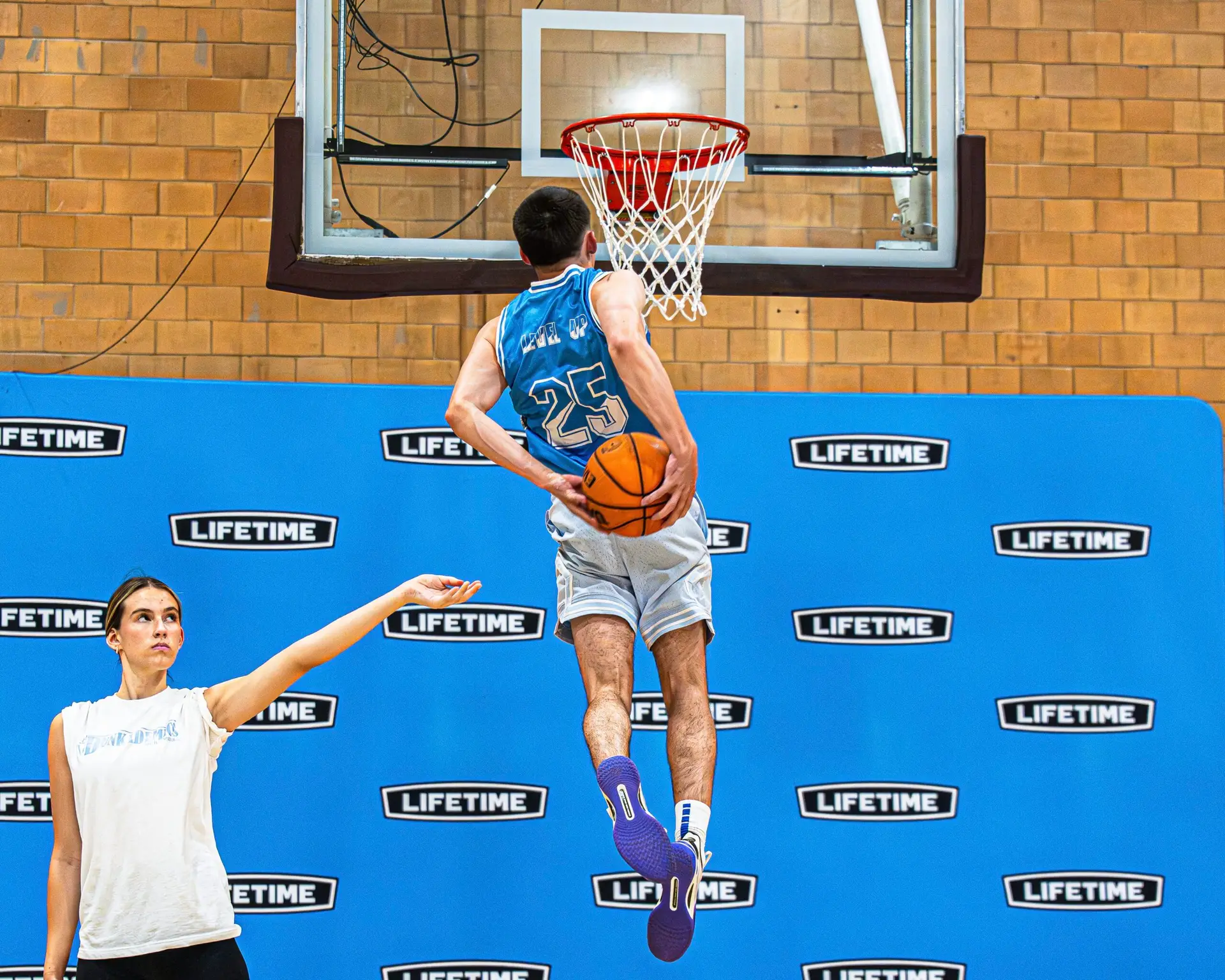
- Dunk 3 (final round vs Hunter and Luke): 360 Underboth off one foot, on 8’. He’d only ever made it once or twice before in his life. Made it in the contest. Pretended to wave Hunter into the dunk as a fake setup before going for it.
The contest used the World Dunk Association (WDA) scoring system, which rewards punched dunks and Underbody / 360 variations heavily. That structure helped him. Final scores landed Miles around 67 points to roughly 52 for the runner-up. Winner of the 8’ contest at his first Dunk Camp.
The Thursday night show
The Thursday night dunk show at Jordan High School was Miles’s favorite part of the week. Top highlights from his perspective: Jonathan Clark’s Eastbay over four people. Kilganon’s height check on a Vertec set to 12 feet (Kilganon touched the top, but the Vertec wasn’t verified as calibrated, so he’s not counting the touch. He’ll test the real 50 this year). Southerland hitting two-foot dunks for the first time Miles had ever seen in person. Isaiah’s Tetris dunk (the highest Miles has ever seen anyone jump). Kilganon’s “double dunk” through-one-rim-into-the-other dunk. Two dunks in that show had never been done in a show before.
Goals: more consistency on 10’, the Kilganon program, and the All-Star Game
Miles’s current dunk goals are about consistency on 10’. Even at peak fitness he’s landing one to four dunks per ten attempts on a real 10’ rim. The session he had at his church gym (rims around 9’10.5”) the night before the recording was 15 max jumps, all back-rimming the dunk he was working on with his head about at the rim. He’s also pushing for a consistent 180 Windmill on 10’.
For training he’s starting Jordan Kilganon’s jump training program with his dad. (Kilganon’s GOAT-case episode is here.) He’ll be doing one to two dunk sessions a week alongside. The lesson he’s already learned from one week on the program is the same one I keep hearing from everyone on a structured program: the lifting technique is the actual unlock when you’re young. Force production goes up naturally as you mature; locking in good form now means a much bigger ceiling later.
Bigger picture: he’s pushing for an All-Star Game appearance via cold email, the same way he got the Jazz partnership. He’s also planning a session with the 5’4” dunker T-Jackson and possibly Professor in LA. Plus Dom Dunks, Chris Staples, and Tyler Curry all live in LA so there’s a session group there too.
The bigger lesson on YouTube
If I had to summarize Miles’s entire content strategy in one sentence: relentless trial and error, no “magic tool” investments, and aggressive outbound when an opportunity is visible. Globetrotters: he saw the tour stop announced and made 57 days of countdown content. AirRack: he saw the IG story late at night and made the submission video that same night. Utah Jazz: he sent 20 cold emails. None of those moves required follower count to work. He made them with 100K, 500K, and 1.8M subs respectively. The strategy works at every stage of a creator’s career.
That’s the part I want any dunker reading this to take seriously. The good dunkers in the community who aren’t getting brand deals don’t need more followers. They need to send the emails.
Where to find Miles
Miles is “Miles McDeezy” on YouTube and “Miles McDeezy” on Instagram. (He doesn’t check TikTok much because, in his words, TikTok Shop has ruined the algorithm, since they push monetizable content over real content.) Go subscribe on YouTube. The basketball-related content is some of the most original on the platform right now.
Next episode is with Justin Blanchard on the creation and future of dunk groups / dunk clubs. After that the Hyrum Fechser 48.5″ vertical interview. DunkMan League is coming this summer.